Why You Feel Nothing When Everything Is Fine
There's a specific kind of suffering that nobody talks about because it doesn't look like suffering. You have the apartment. You have the partner. You have the career, the friends, the trips, the photos, the life that on paper is exactly what you wanted. And inside, where your emotions used to live, there's a flat gray nothing.
Not sad. Not angry. Not even tired in the way that justifies the emptiness. Just nothing. You laugh on cue. You say I love you. You show up. You scroll. You consume. You produce. And somewhere between what you do and what you feel, there's a gap that's been growing for years, and you don't remember when it started, and you can't tell anyone because it sounds insane to complain about being numb when your life is fine.
This isn't depression. It's worse, in a way.
Depression has shape. Depression has weight. Depression makes it hard to get out of bed, makes food taste like cardboard, makes the world look gray and heavy. What you have is different. You're functional. Highly functional, even. You hit your deadlines. You answer your messages. You go to the gym. You appear, to anyone watching, like a person who has their life together. And that's part of why it's so isolating, because there's no socially acceptable language for "everything is good and I feel nothing."
Doctors call this anhedonia, the loss of the ability to feel pleasure. It's a symptom of depression for some people, but it shows up on its own in millions of others who never meet the clinical criteria for anything. They're not sick. They're not broken. They're just empty. And the world has no idea how common this is becoming.
How the lights went out
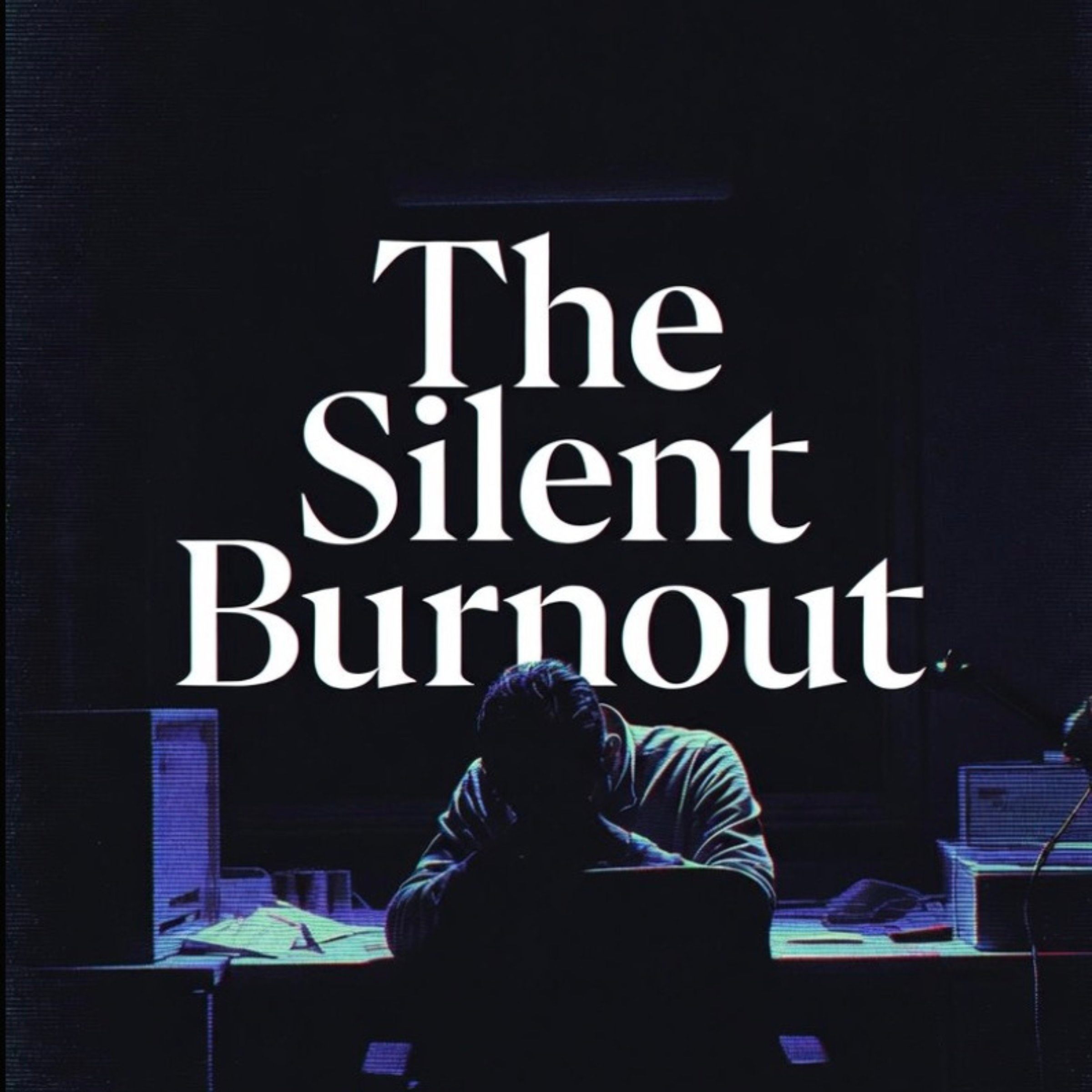
There isn't one cause. Emotional numbness is the body's response to overload, and there are many ways to overload the system. The most common is years of low-grade burnout that no one called burnout. You worked too hard for too long without recovery. You scrolled too much. You drank a little too often. You used screens, sugar, sex, work, productivity, anything that gave you a quick hit, and you used them so often that your brain's reward system stopped responding to normal stimuli. The volume on pleasure went down because the volume on hyperstimulation went up. Now an ordinary moment, a walk in the sun, a good meal, a hug from someone who loves you, registers as static. You feel nothing because your nervous system has been trained not to.
For others, the lights went out because of something that happened. A loss you never processed. A betrayal you minimized. A version of yourself that died quietly while you were busy surviving. Trauma doesn't always come from one big event. Sometimes it's the slow accumulation of small unmetabolized hurts, and at some point the body decides that feeling is too dangerous, and it turns the dial down. You stopped feeling pain. You also stopped feeling joy. They were on the same circuit.
The spiritual exit
There's a third path to this place, and almost nobody writes about it honestly. Some people stopped feeling because they started seeing. They went through what you might call an awakening, a period of clarity in their late twenties or early thirties where they suddenly understood that most of what the culture was selling them was a scam. Status. Consumerism. The grind. The performance of a perfect life on social media. They saw it, they took the red pill, and then they realized that knowing the truth doesn't replace the dopamine the old life was giving them. They got the clarity. They didn't get the joy. They were too awake to enjoy the matrix, and not yet built for what comes after.
If you came of age around 2020 and you can't quite remember the last time something genuinely moved you, this might be you. The numbness isn't a malfunction. It's the gap between two lives, the one you left and the one you haven't built yet.
The cost of fine
The word "fine" is doing a lot of work in your life. It's how you answer the question "how are you" because the real answer is too long, too strange, and too embarrassing. But fine has a price. Every time you say it instead of the truth, you reinforce the distance between you and the people who love you. You teach them not to ask the real questions. You teach yourself not to know the real answers. You become the world's best liar, and the person you lie to most is yourself.
The people in your life can feel it, even if they can't name it. Your partner senses an absence in the room even when you're present. Your friends notice that the conversations have become shallower. Your family has stopped asking how you really are because they've learned not to expect a real answer. The numbness isolates you, and the isolation deepens the numbness.
How to feel again without breaking
You can't just decide to feel. That's not how the nervous system works. If you've been numb for years, throwing yourself at intense experiences won't open you back up. It will overwhelm a system that shut down because it was already overwhelmed. Coming back to life has to be gradual, deliberate, and physical before it becomes emotional.
The audiobook walks you through a five-step framework called the Volume Dial. You learn to stop running from silence, because the silence is where your feelings are waiting. You learn to teach your body to feel small sensations again, because feeling starts in the body, not the mind. You learn to let small things break you open, because catharsis doesn't have to be huge. You learn to recognize the small moments as the actual fabric of a good life, because the big moments were always a myth. And you learn to come back to the people who've been waiting for you to show up.
You're not broken. You're protected.
The most important thing to understand is that the numbness is not a defect. It's protection. Your nervous system shut down for a reason, and it will not let you back in until it trusts that you can handle what's in there. The work is not to force your way back to feeling. The work is to make your life safe enough that your body decides, on its own, that it's okay to come back online.
That's what this book is for. It's not a fix. It's a slow, careful map back to the person who could feel things, before life taught you that feeling was too expensive. Press play. The lights are still wired. They just need time to come back on.