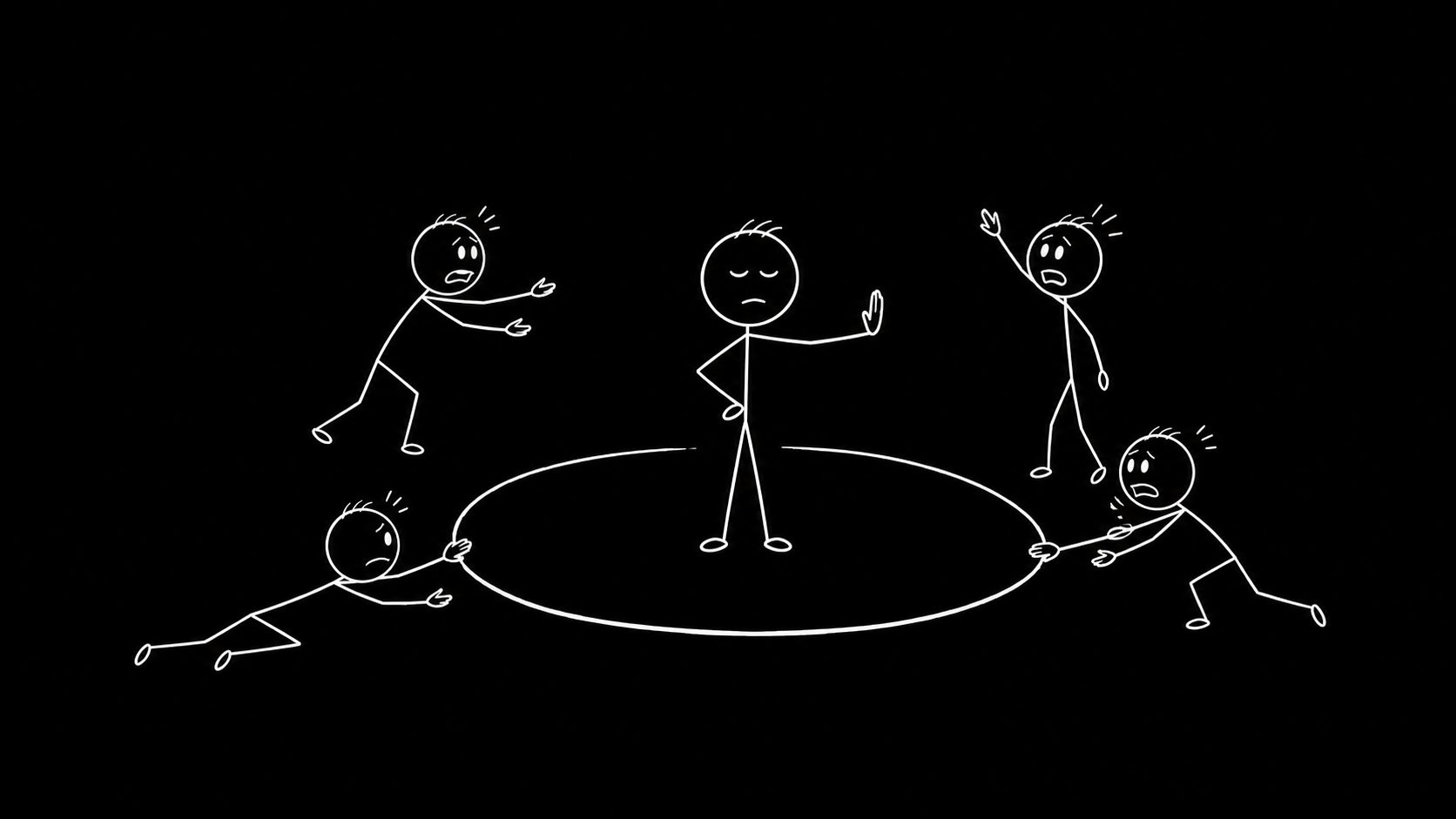
You know you need boundaries. You have read the articles, listened to the podcasts, seen the Instagram posts. You understand the concept. And yet, every time you try to set one, your body floods with guilt so intense it feels like you are doing something cruel.
That guilt is not evidence that you are wrong. It is evidence that you are changing a pattern that has been running since childhood. And the system does not want you to change it.
Why boundaries feel like punishment
If you grew up being rewarded for being easy, accommodating, and low-maintenance, then saying no feels like a violation of the contract. The unspoken deal was: be good, be available, do not make problems, and you will be loved. Boundaries break that deal. And breaking it activates the same fear you felt as a child when love felt conditional.
That is why the guilt is so physical. It is not rational. It is survival programming. Your nervous system is treating a healthy boundary like a threat to your attachment.
The difference between a boundary and a wall
A wall says: I do not let anyone in because people have hurt me. A boundary says: I let people in, and I also protect what matters to me. Walls are built from fear. Boundaries are built from clarity. The confusion between the two is what keeps people stuck in the cycle of overgiving and then shutting down completely.
How to actually set one
A boundary does not require a speech, an explanation, or a confrontation. Most effective boundaries are quiet. They sound like this:
"I cannot do that this weekend." Not "I cannot do that this weekend because I have three other commitments and I am exhausted and here are all the reasons why I deserve to say no." Just the sentence. No justification. The urge to over-explain is the people-pleaser trying to make the boundary acceptable to everyone. It does not need to be acceptable to everyone. It needs to be true.
What happens when you start
Some people will adjust. They will respect the new dynamic, maybe after some initial surprise, and the relationship will actually improve because it is now honest.
Some people will push back. They will guilt-trip, withdraw, or test the boundary repeatedly. This is not proof that you made a mistake. This is proof that the old dynamic served them, and they are uncomfortable with the change.
And some people will leave. Not because you set a boundary, but because the only version of you they wanted was the one without limits. Losing them will hurt. But keeping them was hurting you more. You had just normalized it.
The guilt gets quieter
The first boundary is the hardest. The guilt is loud, the doubt is constant, and you will want to take it back within hours. Do not take it back. Sit with the discomfort. Let your nervous system learn that setting a limit does not result in abandonment.
The second boundary is slightly easier. By the tenth, it starts to feel natural. Not comfortable, necessarily. But natural. Like something your body was always supposed to do but forgot how.
If you are in the early stages of learning to say no, Not Giving a F*ck Anymore is the book that started this conversation. And you can buy the paperback here.
Marieme Seck is the author of self-help audiobooks available on Spotify and 30+ platforms worldwide.