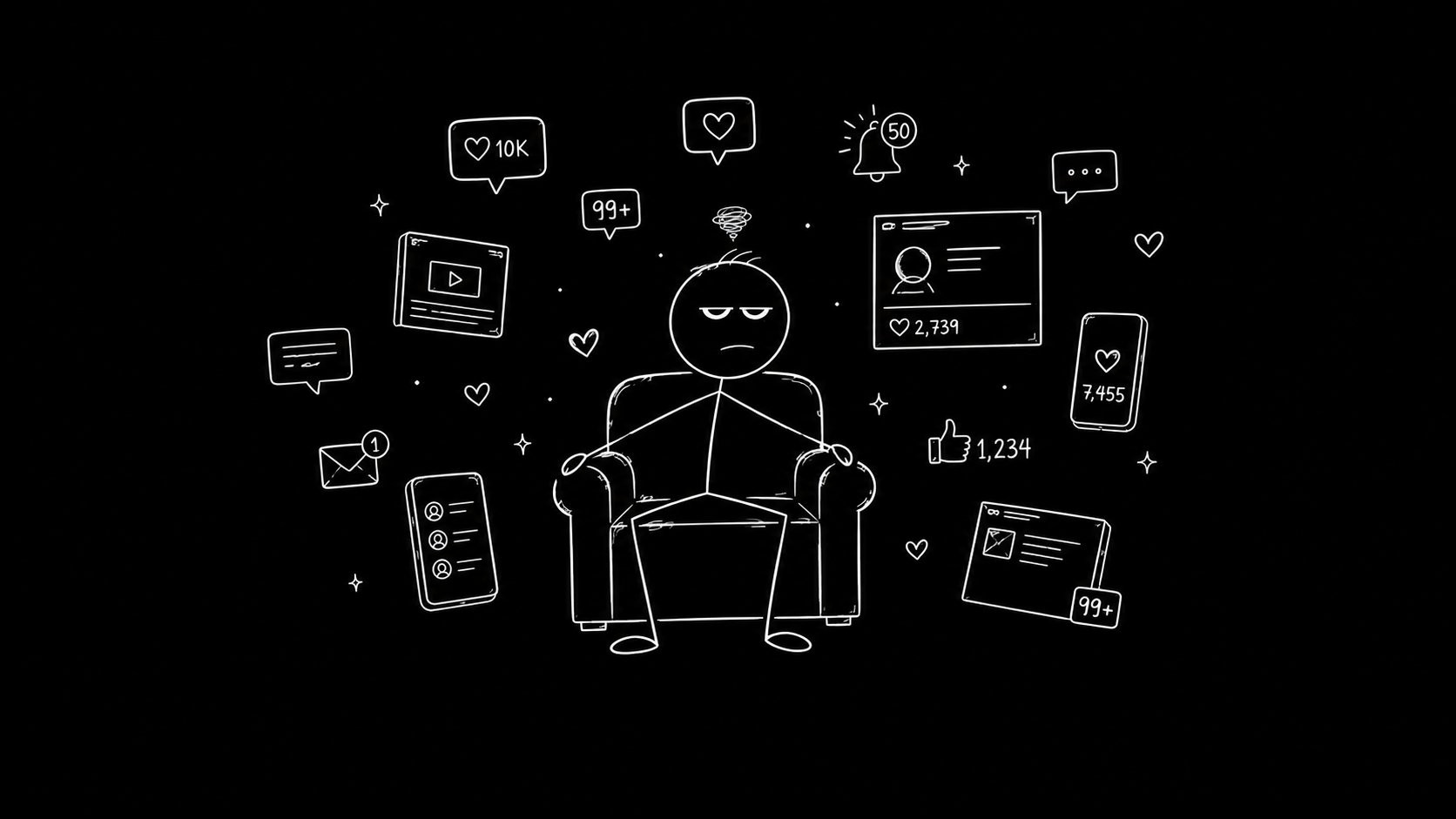
You scroll through your phone for an hour and feel nothing. You binge a show that everyone says is incredible and feel nothing. You eat something you used to love and it barely registers. You go on vacation and spend most of it wondering why you are not happier.
You are not depressed. Or maybe you are. But before you diagnose yourself, consider this: your brain might simply be flooded. Overstimulated to the point where normal pleasures no longer register on the scale. This is the dopamine trap, and almost everyone living in 2026 is caught in some version of it.
How your reward system actually works
Dopamine is not the "happiness chemical." It is the anticipation chemical. It does not reward you for getting the thing. It rewards you for wanting the thing. And when your brain is constantly fed small hits of anticipation, through notifications, infinite scroll, instant delivery, one-click everything, it adapts. It raises the threshold. What used to feel exciting becomes background noise.
This is not a moral failure. This is biology. Your brain is doing exactly what it was designed to do: adjusting to the environment. The problem is that the environment you have built is one of perpetual stimulation, and your brain has stopped being impressed.
The signs you are in the trap
You pick up your phone without knowing why. You check the same three apps in a loop even though nothing has changed. You start movies and abandon them after ten minutes. You feel restless when nothing is happening, but exhausted by everything that does happen. You have a growing list of things you want to do and zero motivation to start any of them.
This is not laziness. This is a reward system that has been recalibrated to require increasingly intense stimulation just to feel normal. Quiet moments feel unbearable because your brain has forgotten how to be unstimulated.
Why it feels like you are broken
The most insidious part of the dopamine trap is that it mimics depression. The flatness, the lack of motivation, the inability to enjoy things that used to bring pleasure. But where depression is often chemical and requires clinical support, the dopamine trap is environmental. You built the cage. Which means you can also take it apart.
What actually works
Dopamine detoxes, as they are marketed online, are mostly theater. You do not need to sit in silence for a week. You need to reduce the baseline. Lower the noise floor so that normal pleasures can register again.
That means creating pockets of boredom. Real boredom. Not the kind where you are bored for thirty seconds and then reach for your phone. The kind where you sit with the discomfort of having nothing to consume and let your brain recalibrate.
It means choosing one thing at a time instead of three. Eating without scrolling. Walking without a podcast. Going to bed without a screen. Not because screens are evil, but because your brain needs space between stimuli to remember what genuine interest feels like.
The goal is not to eliminate pleasure. The goal is to feel it again.
If this hit home, Nothing Feels Good Anymore goes deeper into emotional numbness and what it takes to feel again. Free on Spotify.
Marieme Seck is the author of self-help audiobooks available on Spotify and 30+ platforms worldwide.