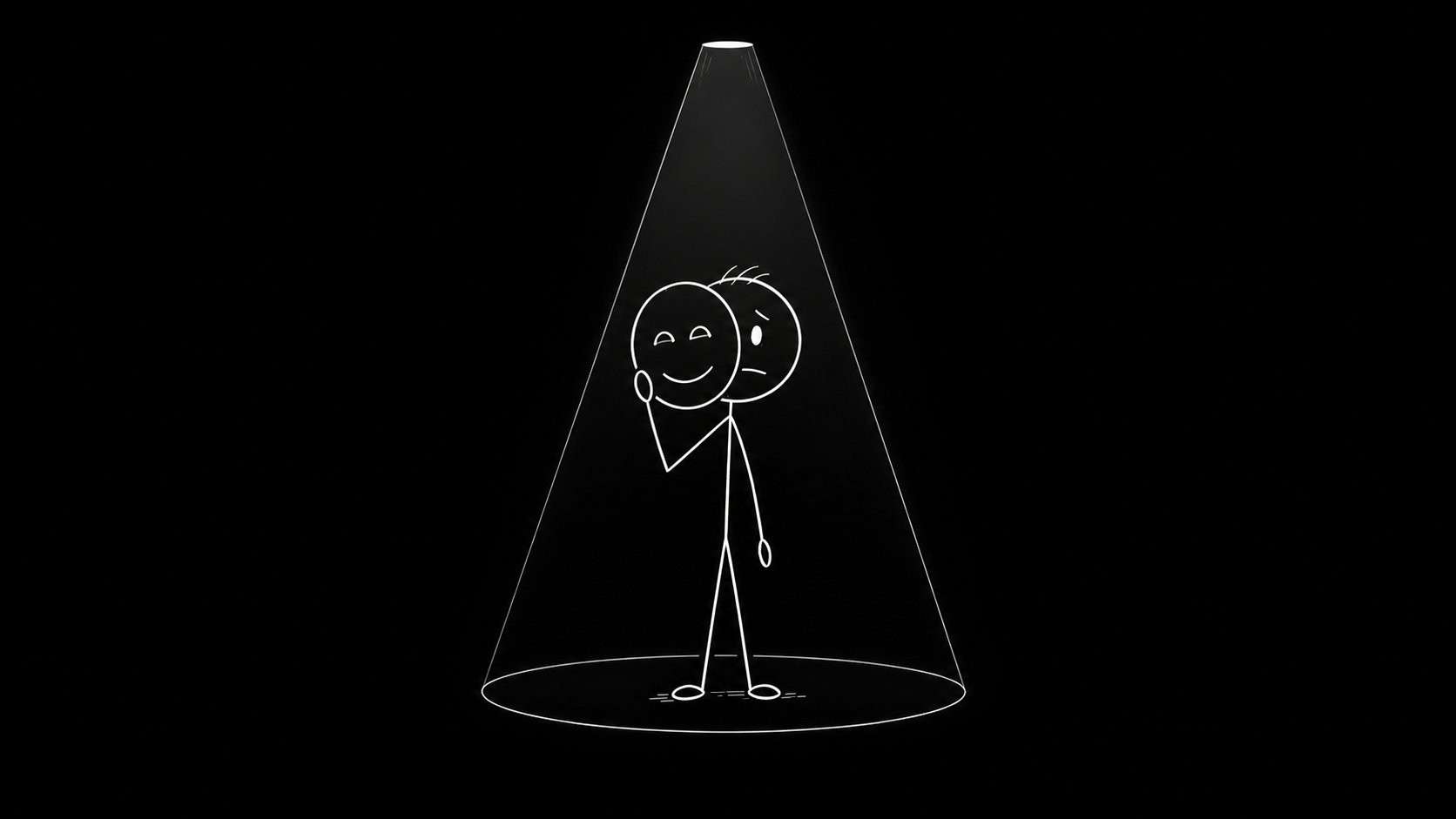
There is a specific kind of dread that high achievers know intimately. You get the promotion, the recognition, the result you worked for, and instead of feeling proud, you feel exposed. Like someone accidentally gave you credit that belongs to someone else. Like it is only a matter of time before they figure out you do not actually know what you are doing.
This is not humility. This is not self-awareness. This is imposter syndrome, and it is one of the most misunderstood psychological patterns of the last decade.
What imposter syndrome actually is
The internet has turned imposter syndrome into a motivational meme. "Everyone feels it! Just push through!" But that framing misses the point entirely. Imposter syndrome is not a confidence gap. It is a identity gap. The distance between who you are performing to be and who you actually feel like underneath the performance.
When you spend years building a public self that is polished, competent, and in control, and your private self still feels uncertain, messy, and figuring things out, the gap between the two becomes unbearable. Every success widens it. Because each achievement raises the stakes of being "found out."
Why it hits the most capable people the hardest
Imposter syndrome does not happen to people who do not care. It happens to people who care deeply about doing good work. People who hold themselves to standards so high that meeting them feels like luck rather than skill. People who compare their internal experience (doubt, confusion, effort) to other people's external presentation (confidence, ease, polish).
You are comparing your rough draft to everyone else's final edit. And then wondering why yours does not measure up.
The childhood roots
For most people, imposter syndrome did not start at work. It started at home. If you grew up in an environment where love was conditional on performance, where being good meant being useful, where mistakes were met with withdrawal rather than support, you learned early that your value depends on what you produce, not who you are.
So you produced. You performed. You became the smart one, the responsible one, the one who always figures it out. And somewhere along the way, you forgot that you are allowed to be a person who does not have it all figured out. That uncertainty is not failure. It is just being human.
The real fear underneath
Imposter syndrome is not really about being exposed as incompetent. It is about being exposed as ordinary. As someone who tries hard, fails sometimes, and does not always know the answer. The fear is not that you are bad at what you do. The fear is that without the performance, without the achievements, without the carefully curated competence, you are not enough.
That fear did not come from your job. It came from somewhere much older.
What actually helps
The standard advice is to "list your accomplishments" and "remind yourself you earned it." This is useless. You already know you earned it intellectually. The problem is you do not feel it. And feelings do not respond to lists.
What actually helps is closing the gap between your public and private self. Letting one person, just one, see the uncertain version of you. Admitting out loud that you do not know something instead of pretending you do. Allowing yourself to be mediocre at something without it threatening your identity.
The goal is not to eliminate self-doubt. The goal is to stop letting self-doubt run the performance. To show up as the full, complicated, not-always-confident version of yourself and discover that you are still respected. Still valued. Still enough.
If this resonated, The Year I Stopped Pretending is about what happens when you finally let the mask fall. And Not Giving a F*ck Anymore is about setting down the weight that was never yours to carry.
Marieme Seck is the author of self-help audiobooks available on Spotify and 30+ platforms worldwide.