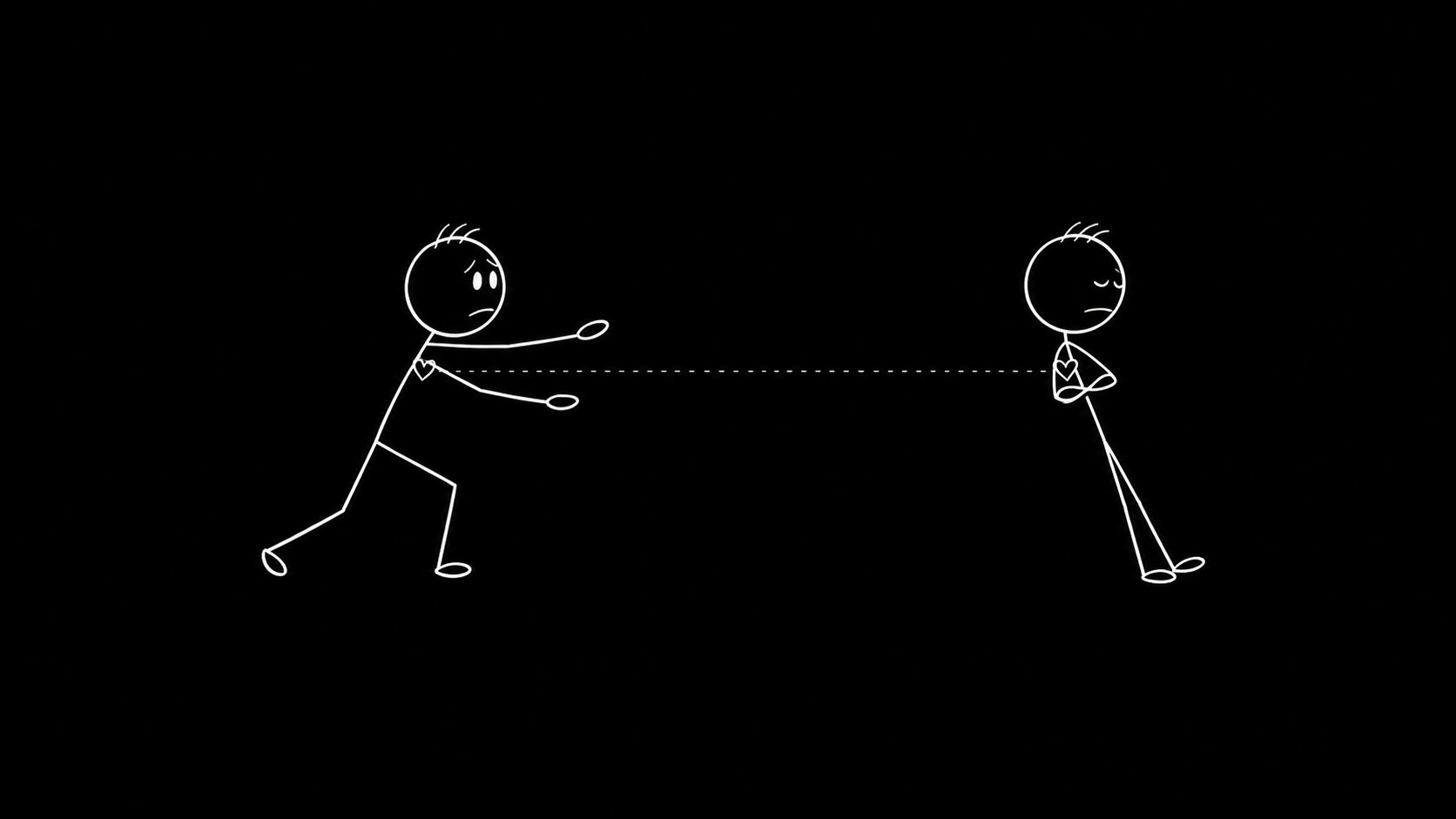
You keep ending up in the same relationship. Different person, different name, different face, but the same dynamic. You chase someone who pulls away. Or you pull away from someone who chases you. Or you do both, alternating between desperate closeness and panicked withdrawal, and you cannot figure out which one is really you.
This is not bad luck. This is your attachment style running the show, and it has been doing so since long before your first relationship.
What attachment styles actually are
Attachment theory is not a personality quiz. It is a framework developed from decades of research on how early relationships with caregivers shape the way you connect with people for the rest of your life. The way your parents responded to your needs as an infant, consistently, inconsistently, or not at all, wired your nervous system to expect certain things from love.
Anxious attachment
If your caregiver was inconsistent, sometimes responsive and sometimes absent, you learned that love is unpredictable. You developed a hypervigilance around connection: constantly monitoring for signs that someone is pulling away, needing frequent reassurance, interpreting silence as rejection.
In relationships, this looks like texting too much, reading into everything, needing to know where you stand at all times, and feeling like your entire emotional state depends on your partner's mood. It is exhausting. Not because you are "too much." Because your nervous system is stuck in alert mode.
Avoidant attachment
If your caregiver was emotionally unavailable or dismissive, you learned that depending on anyone is dangerous. You developed self-reliance as a survival strategy: handling everything alone, keeping emotional distance, valuing independence above all else.
In relationships, this looks like pulling away when things get serious, feeling suffocated by closeness, keeping a mental exit plan at all times, and dismissing your partner's emotional needs as "too much." It is not that you do not want love. It is that love, real love, triggers a vulnerability your system was built to avoid.
The anxious-avoidant trap
Here is the cruelest pattern in attachment theory: anxious and avoidant people are magnetically attracted to each other. The anxious person's pursuit activates the avoidant person's need to withdraw. The avoidant person's withdrawal activates the anxious person's need to pursue. Both feel terrible. Neither can stop. And both are convinced the problem is the other person.
It is not. The problem is two wounded nervous systems triggering each other's deepest fears in a loop.
You can change this
Attachment styles are not permanent. They are patterns, and patterns can be rewritten. But not through willpower or positive thinking. Through experience. Through relationships, with a therapist, a partner, or even a friend, where your nervous system learns that it is safe to be vulnerable without being abandoned, and safe to be close without losing yourself.
The first step is always the same: recognize the pattern. Not to judge it. Not to shame yourself for it. But to see it clearly enough that the next time it activates, you have a split second of awareness before the autopilot takes over. That split second is everything.
If you recognized yourself in this, The Year I Stopped Pretending goes deeper into the patterns we inherit and the courage it takes to rewrite them.
Marieme Seck is the author of self-help audiobooks available on Spotify and 30+ platforms worldwide.