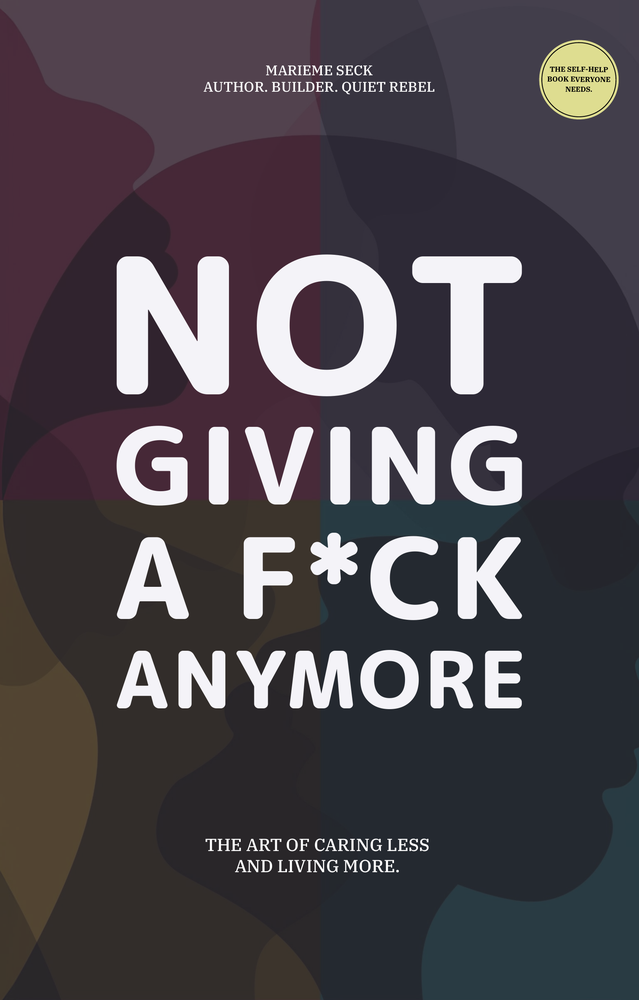
Why You're Exhausted: The Hidden Cost of Caring About Everything
If you're tired all the time and you can't figure out why, the answer probably isn't sleep. It isn't your diet. It isn't even your job. It's the thousand silent transactions you make every day, giving pieces of your energy to people, opinions, and expectations that have nothing to do with the life you actually want to live.
You wake up already braced. You check your phone before your feet hit the floor. You scan for messages you might have missed, problems you might have caused, signals about whether the people in your life are still pleased with you. Then you start the performance. The professional smile. The agreeable tone. The careful editing of every email so no one misreads you. The mental rehearsal of conversations that haven't happened yet, and the post-mortem of conversations that ended hours ago.
By the time you've had your first coffee, you've already spent more energy than most people spend in a day. And you haven't actually done anything yet.
The performance you didn't sign up for
Most people don't realize they've been performing their entire adult lives. The performance starts subtly. You learn as a child that being agreeable gets you love. You learn that being useful keeps you safe. You learn that having strong opinions makes people uncomfortable, so you soften everything. By the time you're an adult, you've internalized the rules so completely that you don't even notice you're following them.
You apologize when someone bumps into you. You laugh at jokes that aren't funny. You say yes to plans you don't want to go to. You read the room before you read your own body. You measure your worth by how little inconvenience you cause. And every single one of these micro-decisions costs energy. Not a lot individually. But hundreds of them per day, thousands per week, millions over a lifetime, and you end up burnt out in a life you technically chose.
Why your brain won't let you stop
The reason you can't just decide to stop caring is that your brain is wired to care. Humans are social animals, and for most of our history, being rejected by the group meant death. Your nervous system still believes this. When you imagine someone being upset with you, when you imagine being criticized, when you imagine being seen as selfish or difficult, your amygdala fires the same alarm it would fire if a predator stepped into the room. Your body responds to social threat as if it were physical threat. That's why the thought of disappointing someone can keep you up at night. That's why a single critical comment can ruin your day. That's why you'd rather suffer in silence than ask for what you need.
The problem is that the threat is no longer real. You won't die if your colleague is annoyed with you. You won't be exiled if you decline an invitation. You won't lose your place in the tribe if you say no to a favor. But your nervous system doesn't know that. It's running a software written for the savanna, in a world built for screens.
The hidden currency you've been spending
Energy is not infinite. Attention is not infinite. Care is not infinite. Every adult human has a finite daily budget of focus, emotional bandwidth, and physical stamina. And most people are spending 80 percent of that budget on things that bring them zero return. Other people's moods. Strangers' opinions on the internet. Hypothetical conversations that may never happen. Old conflicts that can no longer be resolved. The faint disapproval of a coworker who doesn't even matter to you. The fantasy of being liked by everyone, which is mathematically impossible and would require you to be no one in particular.
If you actually tracked where your energy goes, you'd be horrified. Most of it goes to people you don't love. Most of it goes to outcomes you don't control. Most of it goes to versions of yourself you don't even like. And the parts of your life that actually matter, the work you care about, the people who love you, your body, your dreams, what's left for them is whatever you have at the end of the day. Which is usually nothing.
What "not giving a f*ck" actually means
This is the part most people get wrong. Not giving a f*ck isn't apathy. It isn't being rude. It isn't pretending things don't matter when they do. It's the opposite. It's caring more deliberately about fewer things. It's withdrawing your energy from everything that doesn't deserve it so you have more to give to what does.
It's deciding that the opinion of a stranger online is not worth twenty minutes of your nervous system being activated. It's deciding that your sister-in-law's passive-aggressive comment is not worth a sleepless night. It's deciding that the rules you absorbed at twenty-three about what a successful life looks like are not the rules you have to follow at thirty-five. It's a slow, conscious process of reclaiming your attention from the thousand small thieves you've been feeding for years.
The 30-day exit from the performance
You don't change a lifetime of conditioning by reading one book. But you can start the process in a single day. The audiobook is structured as a 30-day path that walks you through every major energy leak in modern life. Overthinking. People-pleasing. Validation seeking. Comparison. The exhaustion of trying to control how others see you. The grief of realizing how much time you've already given away. The fear of disappointing people who weren't going to be happy with you anyway.
You'll learn how to identify where your energy is actually going, how to set boundaries without guilt, how to reprogram the beliefs about your worth that were installed in you before you could consent, and how to build a life aligned with what you actually want instead of what you were trained to want. Not in a self-help-cliché way. In a direct, sometimes uncomfortable, honest way.
If you've been performing your whole life
You're not weak. You're not selfish for being tired. You're not broken for needing to stop. You're a human being who has been doing emotional labor for everyone around you for decades, and at some point the bill comes due. This audiobook is the bill being acknowledged. The permission to stop. The map for what comes after.
Press play. Take the first step out of the performance. The version of you that's waiting on the other side has been waiting a long time.