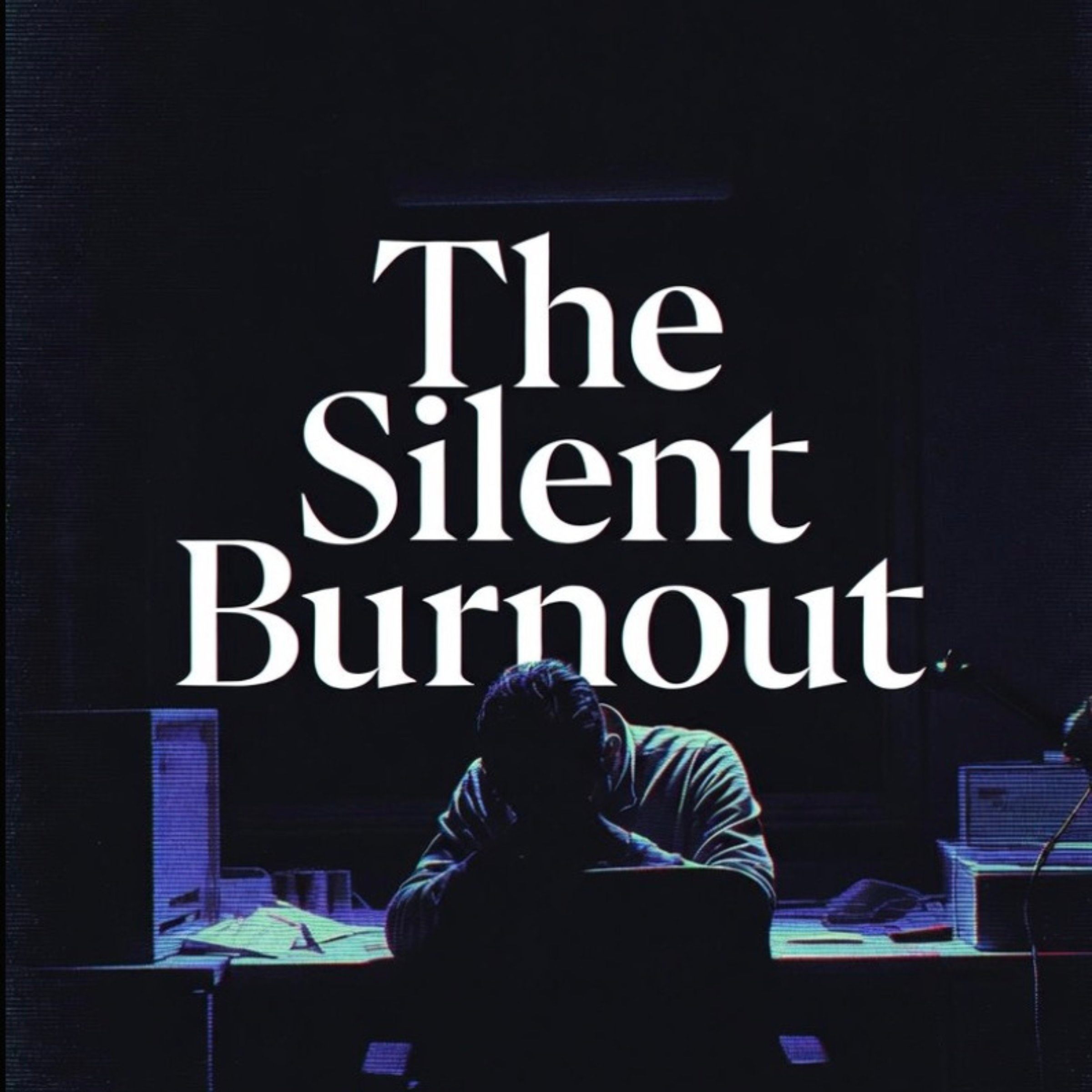
Why You're Always Tired Even Though You're Doing Everything Right
You sleep eight hours. You eat well most of the time. You exercise. You take your supplements. You did the bloodwork and everything came back normal. And you are still, somehow, profoundly tired. Not the kind of tired that a good night's rest fixes. A deeper tired. The kind that sits in your bones and follows you from one day to the next, no matter how much you do to fix it.
You're not lazy. You're not depressed, exactly. You're not sick, by any measurable definition. You are burned out, in a way that doesn't look like burnout, because you never stopped functioning long enough for anyone, including yourself, to notice.
The burnout that doesn't look like burnout
Most people imagine burnout as a dramatic collapse. The executive who can't get out of bed. The doctor who quits in tears. The parent who locks themselves in the bathroom. Those are real, and they happen, but they are the late-stage version. There's an earlier version that's far more common and far more invisible, because the person experiencing it is still showing up to work, still answering messages, still cooking dinner, still being a reasonably good partner and friend.
This is silent burnout. It's burnout that hides inside high functioning. It's the slow erosion of your capacity to feel things, to want things, to recover from things. You're operating at maybe sixty percent of your former bandwidth, but you've calibrated your life to require only sixty percent, so on paper everything looks fine. The version of you that used to come alive at the end of a workday is gone. The version of you that had hobbies, that read books for pleasure, that wanted to do anything other than collapse on the couch with a screen, is also gone. You don't remember when they left.
How the body counts what you don't
The body keeps a running tally of every demand you make of it, even when your conscious mind doesn't. Every late night. Every skipped meal. Every difficult conversation you held it together through. Every meeting you sat in while your nervous system was screaming to get out. Every weekend you spent on your phone instead of actually resting. These don't disappear because you didn't acknowledge them. They accumulate in your tissue. They show up as elevated cortisol. They disrupt your sleep architecture. They suppress your immune function. They reduce your tolerance for stress until tiny things, a critical email, a delayed train, a minor disagreement, send your nervous system into a response that's wildly out of proportion to the trigger.
You think the email made you angry. The email did not make you angry. The email was the last drop in a cup that has been overflowing for years.
The exhaustion no sleep can fix
One of the most disorienting features of silent burnout is that sleep stops being restorative. You go to bed exhausted. You sleep for eight hours. You wake up exhausted. The math doesn't work. You go to your doctor. They check your iron, your thyroid, your vitamin D, your cortisol. Everything is in range. You leave with no answer.
The answer is that the kind of exhaustion you're experiencing is not metabolic. It's nervous-system exhaustion. Your sympathetic nervous system, the gas pedal, has been on for so long that your parasympathetic nervous system, the brake, has lost the strength to take over. You can sleep, but you don't actually rest, because your body has forgotten how to drop into the deep parasympathetic states where real recovery happens. The autonomic nervous system has lost its rhythm, and no amount of sleep will fix it until you address the underlying dysregulation.
The performance of being okay
Silent burnout is sustained by an unspoken rule. The rule is that you must not be the person who is not okay. Everyone else is managing. Everyone else seems to be handling their life. Everyone else posts content from their morning run and their meal-prepped lunch and their well-adjusted relationships. To admit that you are not okay would be to break the social contract, to become the friend everyone has to worry about, to invite judgment from people who have not been carrying what you have been carrying.
So you don't admit it. You answer "good, you?" when people ask. You volunteer for things you don't have the bandwidth for. You hide your fatigue behind caffeine and forced cheerfulness. You become an expert in the performance of being okay. And the performance itself, the constant effort to appear unaffected, becomes one of the largest sources of the exhaustion you're trying to hide.
The lifestyle interventions that aren't enough
You've tried the things. The meditation app. The cold plunge. The supplement stack. The journaling. The gratitude practice. The morning routine. Some of them helped a little. None of them changed the underlying pattern. This is because lifestyle interventions are downstream solutions to an upstream problem. You can't morning-routine your way out of a life that is structurally incompatible with rest.
The real work is structural. You have to look at what is actually draining you and decide what is going to change. The job. The relationship. The number of people you've made yourself responsible for. The volume of input you allow into your nervous system every day. The expectations you have absorbed about what a successful life looks like and how hard you should be willing to work to maintain it. Silent burnout doesn't get fixed by adding more practices to your life. It gets fixed by removing things from your life.
What recovery actually looks like
Recovery from silent burnout is not a vacation. It's not a weekend off. It's a slow recalibration of every system in your body, and it takes months. The first phase is acknowledgment, which is harder than it sounds, because admitting you are burned out feels like admitting you have failed at the test of modern life. The second phase is reduction, where you actively cut things out and let people be disappointed in you. The third phase is parasympathetic retraining, where you teach your body what genuine rest feels like, through specific practices like long walks without your phone, intentional silence, and physical stillness. The fourth phase is rebuilding, where you slowly add back the things that energize you instead of the things that drain you.
The audiobook walks you through all four phases with the science of what's happening in your body and the personal experience of an author who lived in silent burnout for years before recognizing it.
You're not the problem
You are operating inside systems that were designed to extract maximum output from you and to make you feel personally defective when you can't keep up. Burnout is not a character flaw. It's the predictable consequence of demanding a level of performance no nervous system can sustain. The fact that you have made it this far is evidence of how strong you are, not how weak. Press play, and start the work of stopping.