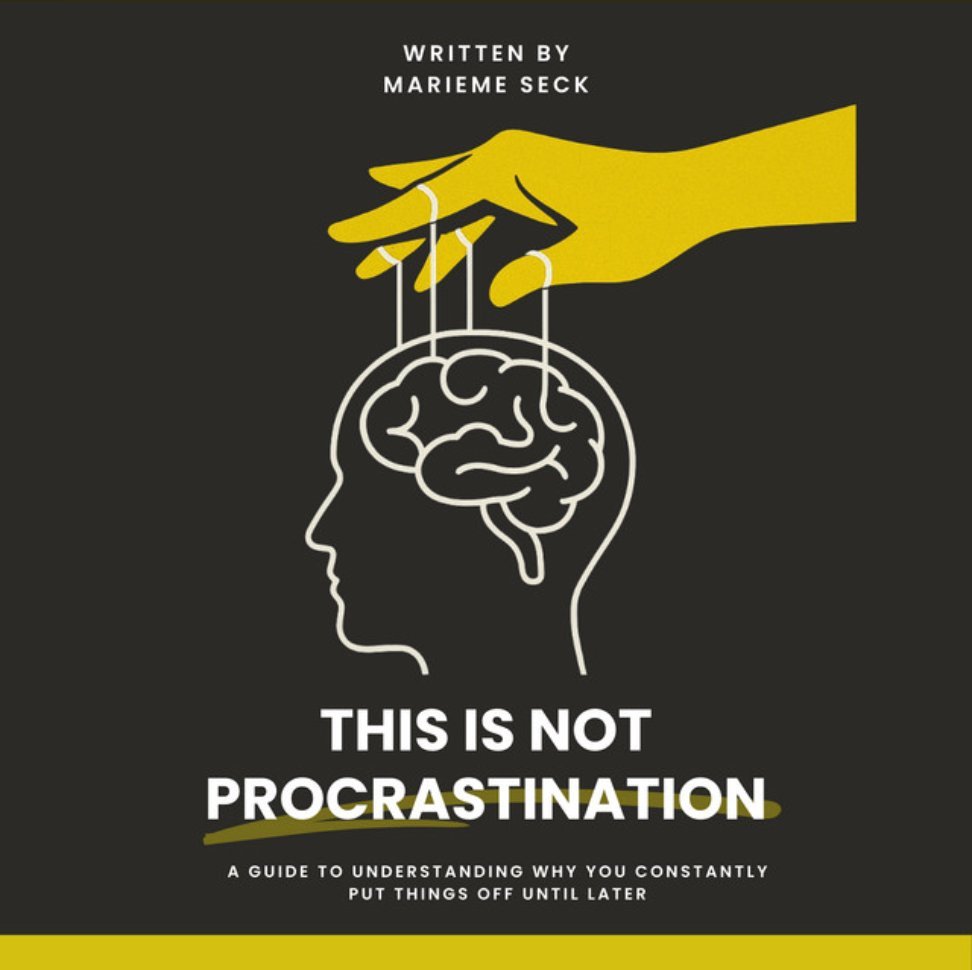
Why You Can't Just Start (And What's Actually Going On)
You know what you should be doing. You wrote it down. You set the alarm. You cleared your schedule. You promised yourself this would be the day. And here you are again, at four in the afternoon, having done everything except the thing, knowing that tomorrow you'll have to apologize to yourself for the same failure all over again.
The culture has a name for this. It calls you lazy. It calls you undisciplined. It calls you a person who needs to want it more. And every time you fail to start, you absorb that label a little deeper into your identity, until you genuinely believe that there is something fundamentally wrong with your character.
There isn't. What you have is not a discipline problem. It's a nervous-system problem dressed up as a moral failure.
The procrastination myth
The standard advice on procrastination is useless because the standard explanation is wrong. You are not procrastinating because you don't want it badly enough. You are not procrastinating because you lack willpower. You are not procrastinating because you need a better planner or a stricter routine or a more aesthetic morning ritual. You can want something with your entire being and still not be able to start, because the thing blocking you is not motivation. It's threat response.
Procrastination is what happens when a part of your brain has decided that the task in front of you is dangerous. Not physically dangerous, but psychologically dangerous in a way that activates the same threat circuitry as physical danger. The task is associated with the possibility of failure. The possibility of judgment. The possibility of confirming a story about yourself that you've been trying not to confirm for years. The task is not the enemy. The meaning your brain has attached to the task is.
What your procrastination is protecting you from
If you put off the project, you can't fail at it. If you don't start the business, you can't be told it's stupid. If you don't write the email, you can't be rejected. If you don't have the conversation, you can't have it go badly. Procrastination is your brain's way of keeping you safe from outcomes it has decided you cannot survive.
This is why the most important tasks are the hardest to start. The tasks that don't matter to you are easy. You can answer emails about logistics all day. You can clean the kitchen. You can run errands. None of those things define you. None of those things, if they go wrong, will say anything about who you are. But the project, the business, the application, the difficult creative work, those things are tied to your identity, and your nervous system has correctly identified that doing them puts your identity at risk. Better to never start than to start and fail.
Perfectionism is procrastination in a suit
If you've ever been called a perfectionist as a compliment, you should know that perfectionism is not the same thing as high standards. High standards make you finish things and ship them. Perfectionism makes you not start them, because starting means producing something that isn't perfect, and producing something that isn't perfect is intolerable.
Perfectionism is the most socially acceptable form of procrastination. You can hide behind it forever. You're not being lazy. You're being thorough. You're researching. You're refining. You're waiting for the right moment. Months pass. Years pass. The book never gets written. The business never launches. The relationship never happens. And the perfectionist gets to maintain the illusion that they could have done it, if only the circumstances had been right.
The dopamine hijack
There's a second layer to modern procrastination that previous generations didn't have, and it's chemical. Your brain runs on dopamine, the neurotransmitter that motivates you to seek rewards. For most of human history, dopamine got released when you did things that were genuinely good for you, eating, mating, accomplishing, connecting. The reward made you do more of the thing.
Now your dopamine system has been hijacked by an industry that has spent billions of dollars studying how to extract your attention and capture your reward circuitry. Every time you open Instagram and get a hit of novelty, every time TikTok serves you a perfectly tuned video, every time your email refreshes and there's something new, you get a small dopamine release. Easier, faster, and more reliable than the dopamine you'd get from doing the hard thing. Your brain learns. Why would you spend hours on a difficult creative project when you can get the same chemical reward in fifteen seconds from your phone?
This is why willpower doesn't work. You are competing against an industry with billions of dollars and the most sophisticated behavioral science ever developed, and you are showing up with raw discipline. You will lose every time.
The ADHD question
If procrastination has been a defining feature of your entire life, if you've always struggled to start, if your brain seems to physically refuse to engage with boring tasks no matter how important they are, it may be worth investigating ADHD. Adult ADHD is massively underdiagnosed, particularly in women and people who learned to mask early. What you've been calling procrastination might be an executive function difference that has nothing to do with character. This is not a diagnosis you can make from a book, but the audiobook covers the markers and what to do about them.
How to actually start
Once you understand that procrastination is a threat response, the strategies change. You stop trying to force yourself through discipline. You start working with your nervous system instead of against it.
You make the task smaller than your fear. If your brain is too scared to write the book, it's not too scared to write one sentence. You separate the task from your identity. The work you produce is not a measurement of your worth. You build environments that make starting easier than not starting. You time-block work and protect it from the dopamine economy. You learn to recognize the specific emotion that comes up right before procrastination starts, usually a flash of dread or shame, and you sit with it for ninety seconds without acting, because most procrastination is what happens when we try to escape a feeling that would have dissipated on its own.
This is not laziness
If you've spent your life thinking you were lazy, you owe yourself a more accurate story. You have been carrying a heavy load of self-blame for something that was never a moral failure. The audiobook gives you the science, the strategies, and the permission to stop hating yourself for not being able to do what no one taught you how to do.
Press play. Start with one chapter. That is, after all, the first practice.