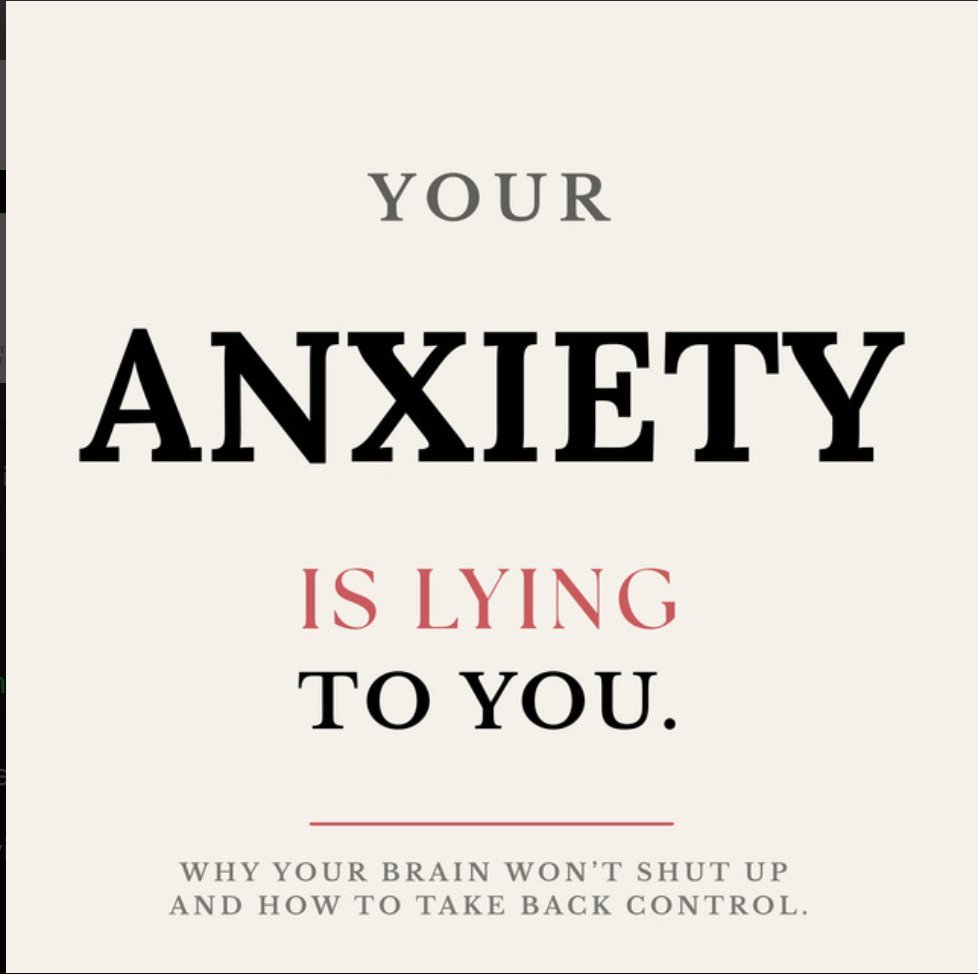
Why You're Anxious All the Time (And It's Not Your Fault)
You wake up at three in the morning and your heart is already racing. You haven't moved. Nothing has happened. The room is dark and quiet and there is no threat anywhere in your life that justifies the alarm currently going off inside your body. And yet your chest is tight, your jaw is clenched, your stomach is in a knot, and your brain has already started scrolling through every catastrophe that could possibly happen tomorrow, next week, ten years from now.
This is anxiety. Not the temporary kind that helps you prepare for a presentation. The chronic kind. The kind that lives inside you like a second nervous system. The kind that has been with you so long you've forgotten what it feels like to be calm. The kind that has convinced you that this baseline of low-grade dread is just who you are.
It isn't.
What anxiety actually is
Anxiety is not a personality trait. It's not a character flaw. It's not weakness. It's a survival system that has been doing its job too well for too long. Your amygdala, the small almond-shaped structure deep in your brain, is a threat detector. It evolved to scan the environment for danger and trigger your fight-or-flight response the instant it sensed one. For most of human history, this was a beautiful piece of engineering. The humans who startled at every rustle in the grass lived longer than the ones who didn't.
The problem is that your amygdala can't tell the difference between a saber-tooth tiger and an unread email. To your nervous system, a critical comment from your boss, a snippy text from your partner, a news headline about the economy, and a predator stepping into your cave all register the same way. Threat detected. Body activated. Heart racing, muscles tensing, breath shortening, mind scanning for escape.
And in a world where threats are now constant, low-grade, and impossible to escape, your amygdala never gets to stand down. It just keeps firing. Day after day. Year after year. Until the threat response stops being a response and becomes a state. That state is what most people call anxiety.
Why the world is making you sick
Anxiety rates have been climbing for two decades and the data is now impossible to dismiss. One in five adults in the developed world meets the criteria for an anxiety disorder. Many millions more live with anxiety that has never been diagnosed because they assume that being constantly worried is just what being an adult feels like.
The reasons are not mysterious. We live in a world built to keep your nervous system activated. Push notifications interrupt you hundreds of times a day. News cycles broadcast crises every fifteen minutes. Social media offers an endless stream of comparison and outrage. Work culture demands availability around the clock. Climate anxiety, economic anxiety, AI anxiety, political anxiety all stack on top of the personal anxieties of relationships, money, health, and the future. Your amygdala was designed for a world of episodic threats. It's been dropped into a world of permanent threat. And it's responding the way it was built to respond, which is by never turning off.
The body keeps the score
Anxiety doesn't only live in your head. It lives in your body. The chest tightness that comes when you check your phone in the morning. The shallow breathing that becomes your default until you consciously remember to inhale. The jaw clench you wake up with. The stomach problems no doctor can explain. The tension in your shoulders that won't release no matter how many massages you get. The fatigue that no amount of sleep can fix.
These are not separate problems. They are anxiety expressing itself through the body because the body and the nervous system are the same system. You cannot think your way out of anxiety because anxiety is not primarily a thought. It's a physical state that produces thoughts to justify itself.
The panic attack myth
Panic attacks feel like dying. The first time you have one, you are convinced you are having a heart attack. The chest pain, the inability to breathe, the dizziness, the certainty of imminent collapse, all of it is so physically intense that the idea that "it's just anxiety" feels insulting. Anxiety doesn't do this. Heart attacks do this.
Except anxiety does do this. A panic attack is your nervous system going into a full survival response without a real threat to attach it to. The chest pain is real. The shortness of breath is real. The dizziness is real. They are produced by the same chemicals that would save your life if a predator were actually attacking you. They are not dangerous. They cannot kill you. And once you learn what is happening inside your body during a panic attack, you can shorten one from twenty minutes to under a minute. This is one of the most liberating things the audiobook teaches.
What your anxiety is lying about
Anxiety has a story it tells you, every day, and the story is always wrong. It tells you that the worst-case scenario is the likely scenario. It tells you that other people are judging you when they're mostly thinking about themselves. It tells you that something terrible is about to happen even when nothing in the available evidence supports that. It tells you that you can't handle what's coming, when in fact you have already handled everything that has come so far.
The most important shift you can make is to stop treating your anxious thoughts as data about reality and start treating them as data about your nervous system. The thought "everyone hates me" is not information about how people feel about you. It's information about how activated your amygdala is right now. The thought "something bad is going to happen" is not a premonition. It's the chemical residue of a survival response misfiring. Once you can hold your thoughts at arm's length and see them as nervous-system output, they lose almost all of their power.
How to actually get better
Anxiety is not cured by willpower. You will not affirm your way out of it. You will not think positive your way out of it. The work is physical and it is slow. You learn to regulate your breath because breath is the one piece of the autonomic nervous system you can consciously control. You learn to feel where anxiety lives in your body and to release it through movement. You learn to identify the inputs that fuel your anxiety, caffeine, alcohol, doom-scrolling, sleep deprivation, unprocessed conflict, and you reduce them. You learn to interrupt panic attacks with specific techniques that bring your nervous system back online in under sixty seconds.
None of this is fast. All of it works. The audiobook gives you the science, the personal experience of an author who lived with undiagnosed anxiety for nearly a decade, and a clear set of practices that have been used by millions of people to rewire an anxious brain.
You're not broken
Your anxiety is not who you are. It's a state your nervous system has gotten stuck in. States can change. Press play, and start the work of unsticking.