Mark Manson's audiobook hit something a lot of self-help had been avoiding: a direct, sometimes profane, refreshingly unsentimental take on what actually makes life work. If you finished it and wanted more in the same register, the good news is the category has grown. Here are the audiobooks worth your time in 2026, organized by what part of Manson's approach they extend.
What Made The Subtle Art Different
Before diving into recommendations, it's worth being precise about what made Manson's audiobook actually work. Three things, mostly:
First, it was honest about the cost of caring. Most self-help promises you can have everything you want if you just want it hard enough. Manson said: you can't, and pretending you can is part of why you're miserable. Choose your problems carefully because every problem is going to cost you something.
Second, it didn't soften. The language was direct. The arguments were uncomfortable. The book did not hold your hand.
Third, it had a clear underlying philosophy: values determine experience. If you value the wrong things, your life will feel wrong, no matter how much of those things you have.
The audiobooks below extend one or more of those threads.
If You Loved The Direct, No-Bullshit Tone
Not Giving a F*ck Anymore by Marieme Seck
The closest thematic cousin on Spotify. Seck takes Manson's philosophy in a more practical, personal direction, with a 30-day path through the specific energy leaks of modern life: people-pleasing, overthinking, validation seeking. Written in the same direct register but with more attention to the nervous-system layer of the work. Free on Spotify.
Everything Is F*cked: A Book About Hope by Mark Manson
Manson's follow-up to The Subtle Art. Less practical, more philosophical, but extends the worldview. Worth listening if you appreciated the underlying argument and want to see where Manson took it.
Unfu*k Yourself by Gary John Bishop
Same register, different angle. Bishop focuses on the self-talk that keeps you stuck and how to interrupt it. Short, punchy, no-frills.
If You Loved The Argument About Values
The Daily Stoic by Ryan Holiday
Manson's framework of choosing your problems is essentially modern stoicism. Holiday's audiobook makes that explicit, drawing from Marcus Aurelius, Epictetus, and Seneca. Useful if you want the deeper philosophical roots.
Atomic Habits by James Clear
Different in tone (Clear is gentler than Manson) but shares the structural insight that your life is the sum of your systems, not your motivation. The audiobook is widely considered the best modern book on behavior change.
Four Thousand Weeks by Oliver Burkeman
If you want a more reflective version of "you can't have it all", Burkeman walks through the implications of the fact that your life is about 4,000 weeks long. Quietly devastating and ultimately freeing.
If You Want To Go Deeper Into The Nervous System Layer
Manson hinted at psychological depth but stayed mostly philosophical. These audiobooks go into the body.
Regulate Your F*cking Nervous System by Marieme Seck
Practical audiobook on polyvagal theory, vagus nerve work, and what to actually do when your body has been activated for years. The direct tone of Manson with the somatic understanding most philosophy-focused self-help misses. Free on Spotify.
The Body Keeps The Score by Bessel van der Kolk
The foundational text on how trauma lives in the body. Longer and more clinical than Manson but essential if you're starting to suspect that your difficulties aren't just about your thinking.
If You Liked The Anti-Consumerism Undertone
Part of why The Subtle Art resonated was that it pushed back on the relentless optimism of consumer culture. These extend that.
Bullshit Jobs by David Graeber
An anthropologist's argument that modern work has filled with meaningless tasks that everyone secretly knows are meaningless. If you've ever wondered why your job feels empty, this audiobook has answers.
Doppelganger by Naomi Klein
Recent (2023), brilliant, and uncomfortable. Klein writes about identity, the internet, and how modern life has fragmented selfhood. Not exactly self-help, but in the territory of why everything feels weird.
If You Want The Female-Authored Equivalent
One critique of Manson is that the philosophy lands differently when you've never had the privilege of opting out of caring. These audiobooks address self-help from explicitly female angles.
Untamed by Glennon Doyle
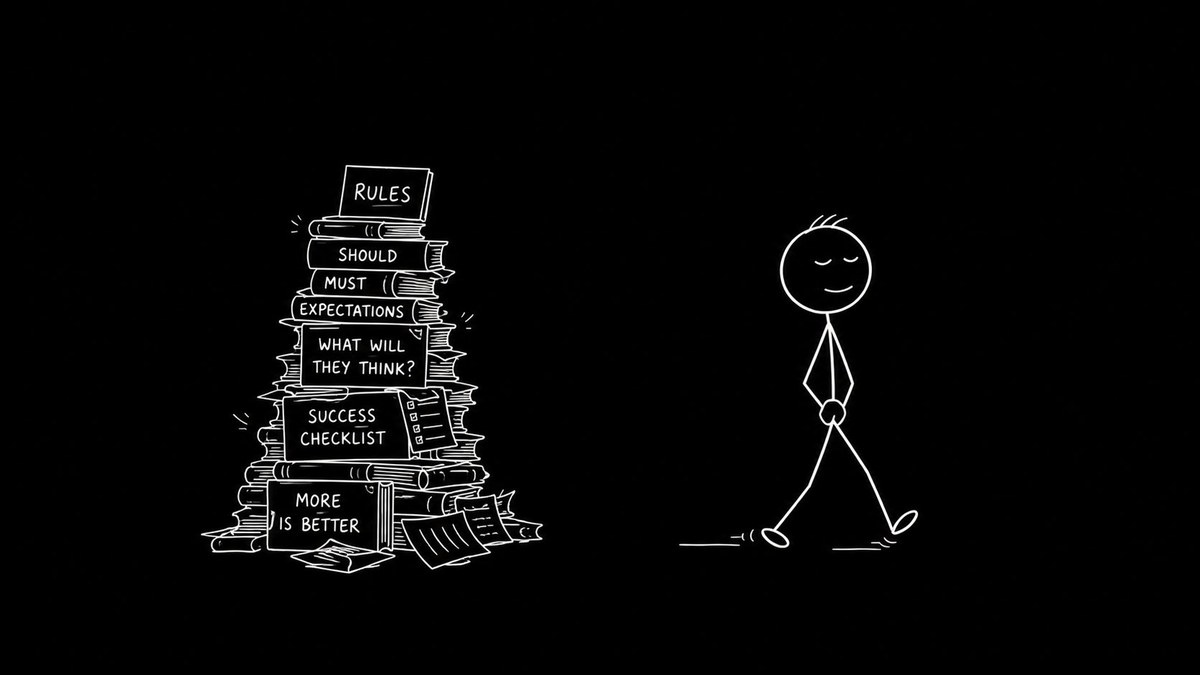
Memoir-essay hybrid about reclaiming yourself after years of performing a life that wasn't yours. Doyle is warmer than Manson but the argument is similar: you absorbed rules that were not yours, and you can stop following them.
Big Magic by Elizabeth Gilbert
Specifically about creative work and the courage required to make things, but the broader argument (that you should pursue what calls to you despite the discomfort) overlaps with Manson's territory.
If You Want The Spiritual Adjacent Without The Woo
Manson's audiobook is secular but touches on meaning. If you're open to slightly more spiritual framing without losing the directness:
The Untethered Soul by Michael Singer
A spiritual book that nonetheless has the rigor of philosophy. About the relationship between you and your thoughts, and what changes when you realize you are not your thoughts.
When Things Fall Apart by Pema Chödrön
Buddhist nun writing about how to be when life isn't working. Direct in its own way, just from a different tradition than Manson. The audiobook is a quiet companion through difficult periods.
Which Should You Start With?
Honest recommendation: if you finished Manson and want the closest follow-up, start with Not Giving a F*ck Anymore by Marieme Seck. It's the most direct continuation of the spirit and the most practical extension of the philosophy. Free on Spotify, two hours, can be listened to in one sitting.
After that, branch based on what's calling you: stoicism (Holiday), habits (Clear), the body (Seck's nervous system audiobook or van der Kolk), or memoir (Doyle).
A Note On Reading Patterns
People who loved The Subtle Art often binge similar audiobooks looking for the same feeling. The feeling is recognition: someone is finally saying out loud what you've been thinking. That feeling diminishes with each subsequent book in the same register, because you've absorbed the worldview. After 3-4 audiobooks in this category, you may notice diminishing returns.
When that happens, the move is not to find another book like Manson. It's to start applying what you've already heard. The next phase of self-help is implementation, not consumption.