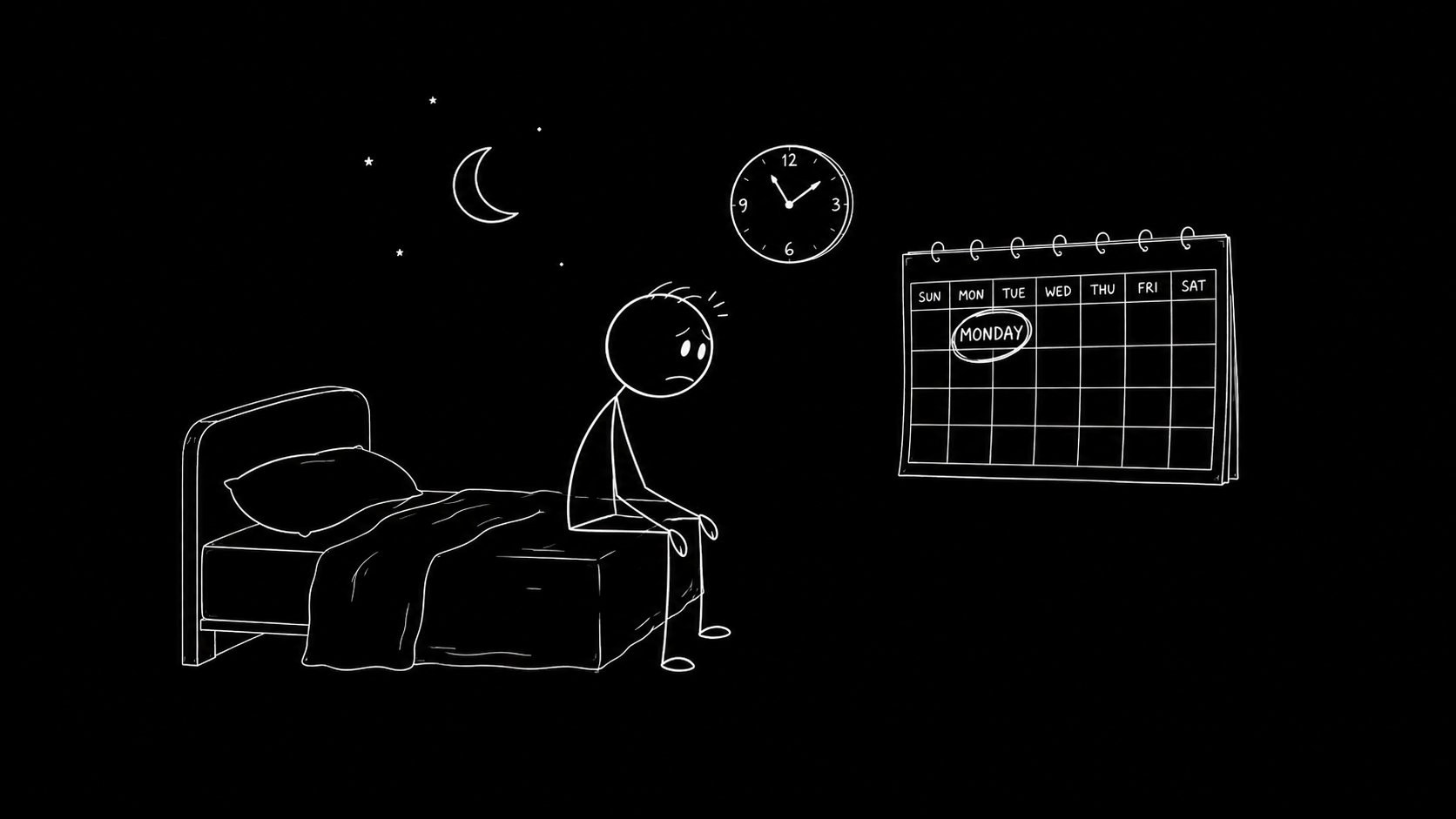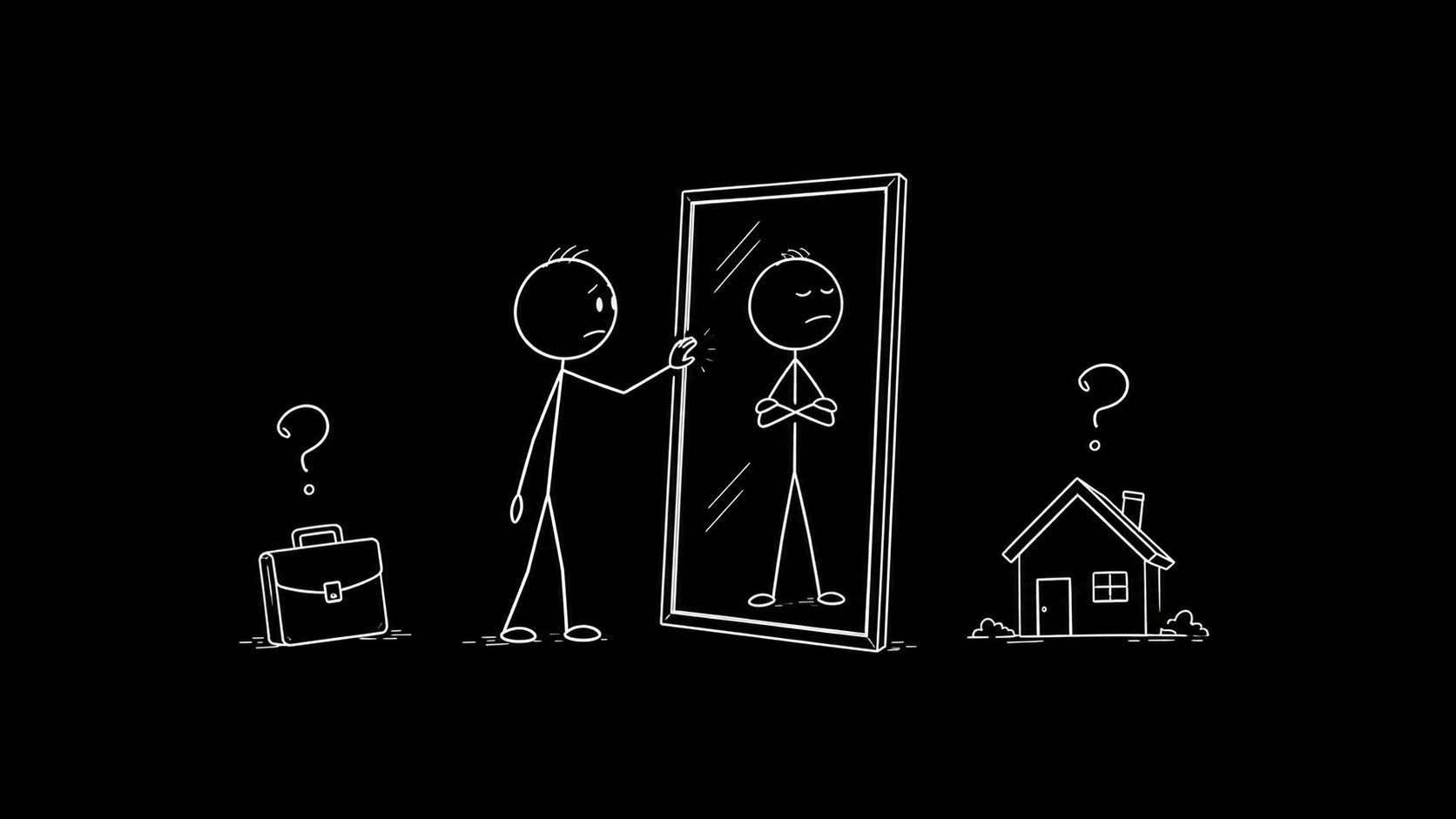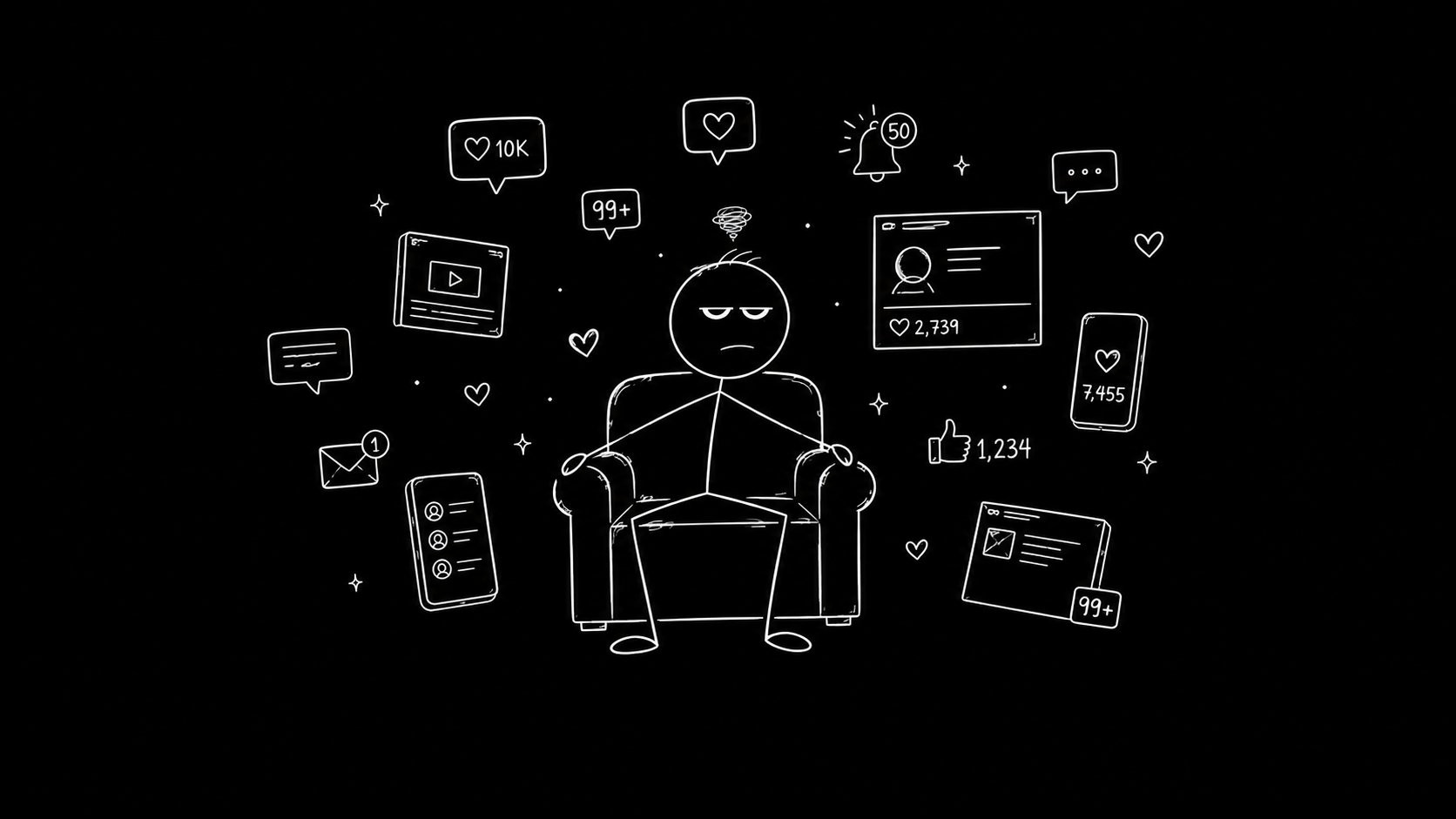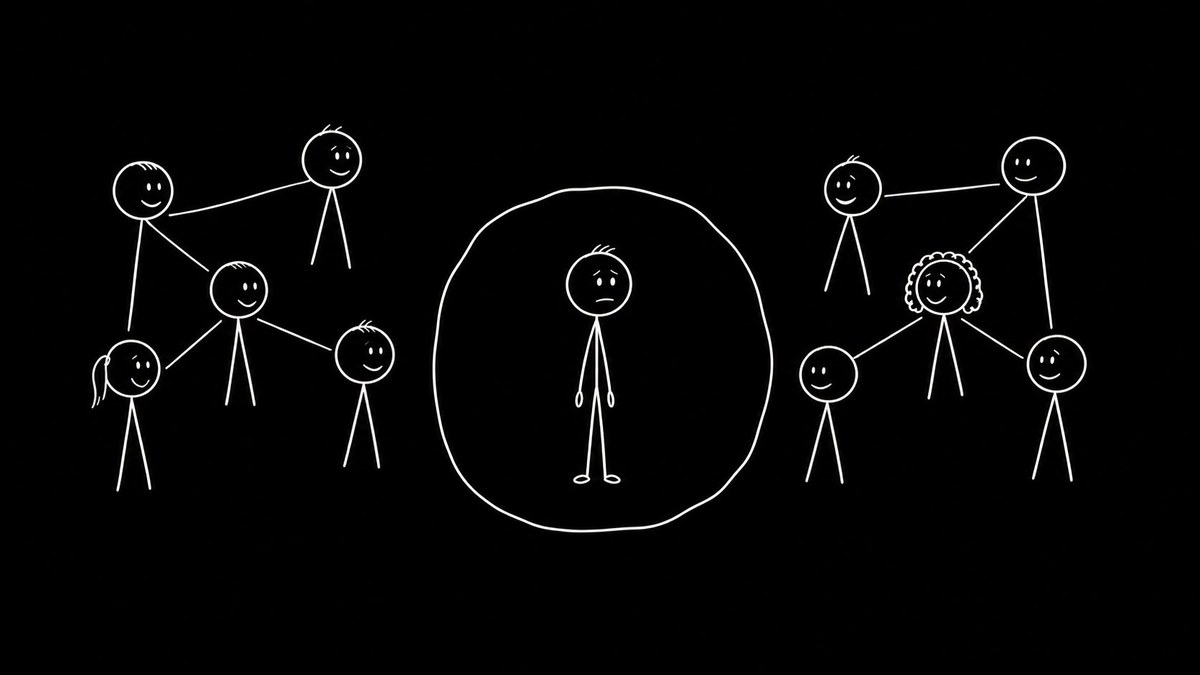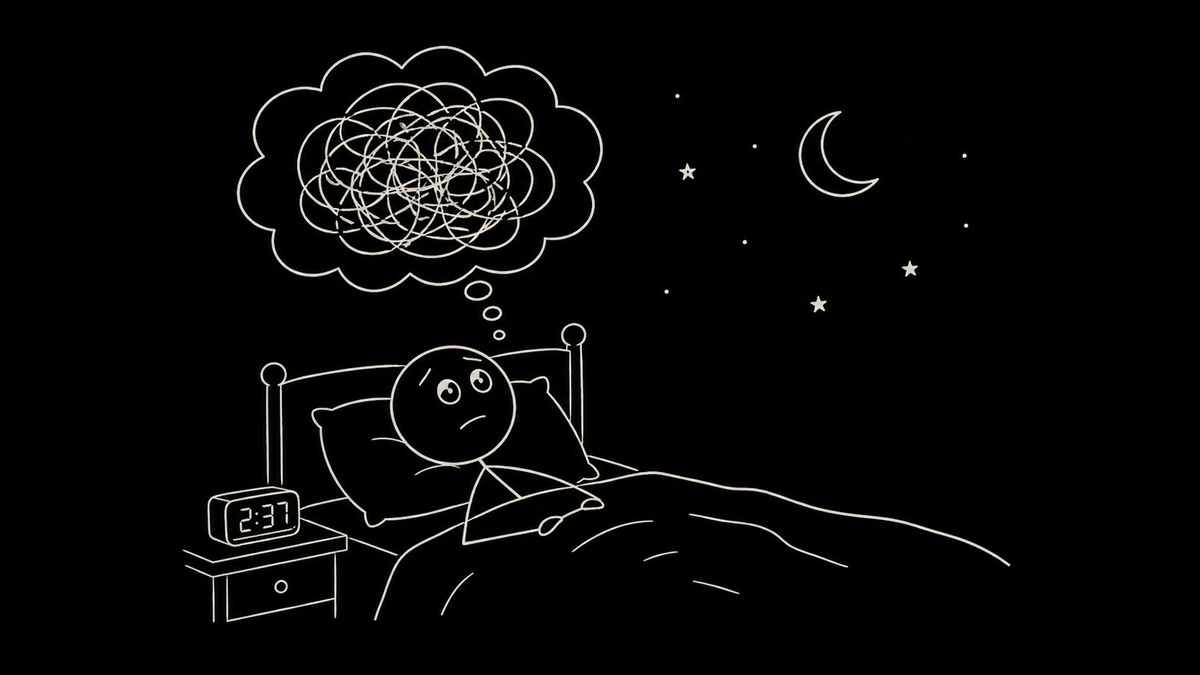
It's 2am. You should be asleep. Instead, you're running through every conversation you've ever botched, every decision you regret, every catastrophe that could happen to you between now and 2040. Your body is exhausted. Your brain is wide awake. And the more you try to force yourself to sleep, the more relentless the thinking becomes. If you've spent years in this pattern, you already know that telling yourself to stop doesn't work. Here's what actually does.
The Hidden Truth About Night Overthinking
Overthinking at night is not random. It's a predictable function of how your nervous system processes the day. During waking hours, your prefrontal cortex (the part of your brain that handles logic, planning, and executive function) is busy. It's responding to inputs, making decisions, navigating social situations. It uses an enormous amount of energy.
When you lie down in the dark and remove all external input, the prefrontal cortex doesn't immediately power down. It keeps running. But now it has nothing to do. So it does what brains do when they have processing capacity and no external task: it processes the backlog. Every unfinished conversation. Every unresolved problem. Every emotion you didn't have time to feel during the day. All of it surfaces, in no particular order, with no off switch.
If your day was full and emotionally demanding, your backlog is enormous. The thinking at night is your brain trying to catch up on integration work it couldn't do while you were busy.
Why This Happens To You Specifically
There are five patterns that make night overthinking dramatically worse for some people:
You don't process emotions during the day. If you've been trained to be functional, agreeable, and productive, you probably suppress or postpone emotional reactions in the moment. They don't disappear. They wait. At night, when the structure of the day falls away, they surface all at once.
You have unfinished mental loops. Your brain has an open-loop system. Anything that's unresolved (a difficult conversation, a decision you haven't made, a project you keep postponing) stays in active memory until it's closed. Open loops are why your brain replays the same content over and over: it's waiting for resolution.
You consume too much information. If you scroll, watch, listen, and read constantly until the moment you try to sleep, your prefrontal cortex has hours of new content to process. Most people consume more information in a day than a 19th-century person consumed in a year. Your brain has to catch up at night.
You're nervous-system activated. If your sympathetic nervous system is in chronic activation, you cannot drop into the parasympathetic state required for sleep. Your body is technically tired, but it's chemically alert. Overthinking is what alertness sounds like in the absence of a real threat.
You associate night with the only quiet you get. If your days are packed with demands, the moment you lie down may be the first quiet moment you've had in 18 hours. Of course your mind opens up. It's been waiting for your attention all day.
The Signs You Should Know
Night overthinking shows up in specific ways:
You can fall asleep but wake up between 2 and 4am with racing thoughts. You replay social interactions you had hours or years ago. You imagine worst-case scenarios in vivid detail. You make to-do lists in your head and feel anxious about everything on them. You feel a sense of urgency about problems you can't solve at 3am. You check your phone, which makes it worse. You finally fall back asleep around 5am, then wake up exhausted.
If most of these are familiar, your nervous system has trained itself to use sleep time for emotional processing, and you need to give it another way.
What To Do About It
The work of stopping night overthinking happens before bed, not in bed. Once you're already spiraling at 2am, your options are limited. Build the practice into your evening.
Do a brain dump before bed. Two hours before sleep, sit with a notebook and write down everything in your head. Every task, every worry, every unresolved thing. You're not trying to solve any of it. You're closing the open loops by getting them out of your head and onto paper. Studies on this show measurably faster sleep onset.
Process the day's emotions. If you felt frustrated, hurt, or anxious at any point during the day and didn't actually feel it, those emotions are waiting. Spend 10 minutes before bed doing nothing, just sitting and feeling whatever comes up. This is uncomfortable. It's also the only way to clear the queue.
Cut information consumption 90 minutes before bed. No phone, no news, no social media, no streaming. Read a physical book, walk, talk to someone you live with, or sit. Your brain needs unstructured time to integrate before sleep, and most people don't give it any.
Use the 4-7-8 breath if you wake up. If you wake up at 3am with racing thoughts, do not check your phone. Do not start solving problems. Inhale through your nose for 4 seconds, hold for 7, exhale through your mouth for 8. Repeat for 5 cycles. This activates your parasympathetic system and slows your brain.
Get out of bed if you can't sleep. If you've been awake more than 20 minutes, go to another room. Read something boring under dim light. Come back when you feel drowsy. Lying in bed awake teaches your brain that bed is a place for thinking, not sleeping.
Address what you're avoiding. Night thoughts are usually about something real. A conversation you need to have. A decision you've been postponing. A truth you don't want to face. Your brain is bringing it up because nothing else has been done about it. If the same thought comes up night after night, the thought is information, not noise.
Have a wind-down ritual. A specific sequence of small actions (tea, stretch, dim lights, music) signals your nervous system that the day is ending. Without this signal, your body doesn't know when to drop into rest mode.
The Deeper Pattern
Chronic night overthinking is rarely solved by a single technique. It's a signal that your nervous system has been operating without enough rest, your emotions have been postponed for too long, and your life has too much input and not enough integration time. The practices above help, but the real work is examining what your life is asking of you and what you've been pretending not to feel.
Most people who fix night overthinking long-term have also rearranged their days to include unstructured time, emotional processing, and significantly less input. The thinking quiets down when the body is given a real chance to catch up.
When To Seek Help
If overthinking is preventing you from sleeping more than 3 nights a week for several weeks, if you're using alcohol or substances to sleep, if your daytime functioning is impaired, or if the content of the thoughts is dark or self-harming, please consult a doctor or mental health professional.
The Audiobook That Walks You Through This
The full framework for understanding the anxious brain at night is in the audiobook Your Anxiety Is Lying To You. It covers exactly why your nervous system gets stuck in overdrive, how to identify what your thoughts are actually trying to tell you, and a complete practice for rewiring the patterns that keep you awake. Listen free on Spotify.