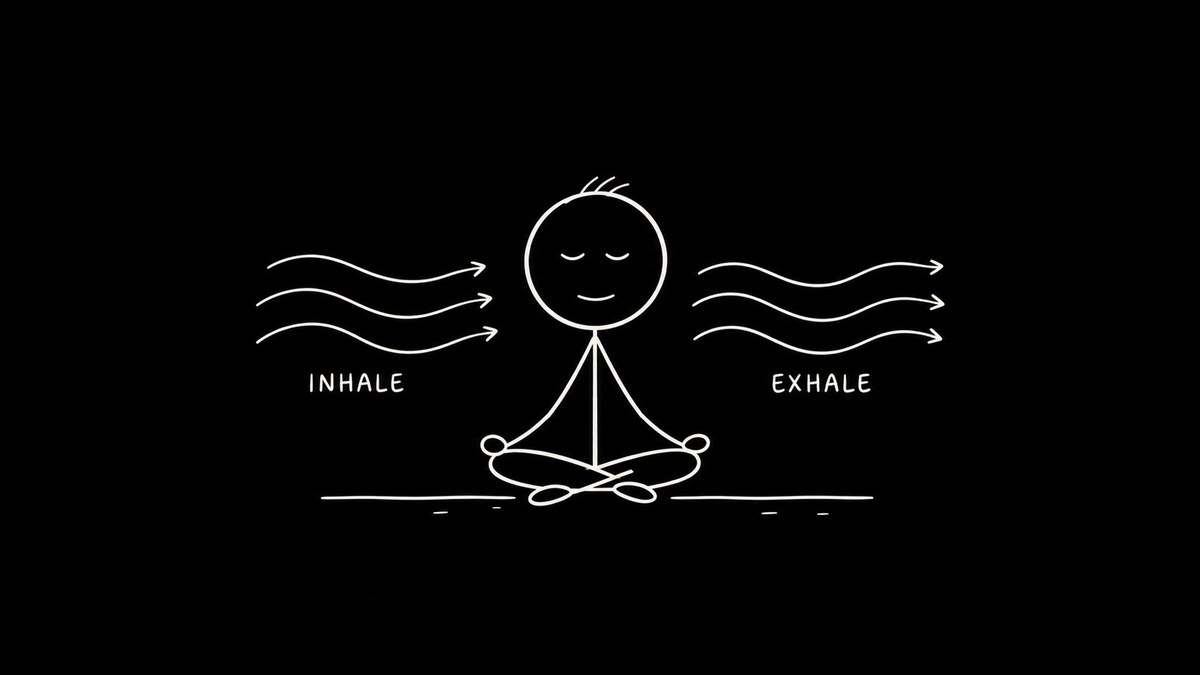
Your nervous system is dysregulated and you need to come down now. Not in an hour. Not after a yoga class. Right now. Your chest is tight, your heart is racing, your brain is spinning, and the meeting starts in five minutes. This is the article for that moment. These techniques are not theoretical. They work physiologically, in seconds to minutes, and they will get you through the next thing without making the situation worse.
The Hidden Truth About Nervous System Regulation
You cannot think your way out of a dysregulated nervous system. The part of you that's activated does not respond to logic, reassurance, or willpower. It responds to physical inputs. Specifically, it responds to inputs that stimulate the vagus nerve, the highway that runs from your brain to your gut, and that carries the signals telling your body whether to be activated or calm.
Every technique below activates the vagus nerve through a specific physiological mechanism. None of them require special equipment, training, or a quiet room. All of them have been studied. All of them work within minutes if you do them right.
The trick is that they don't feel like much while you're doing them. You'll be tempted to give up after 30 seconds because nothing seems to be happening. Don't. The shift is not dramatic. It's chemical, and it takes a few minutes to register consciously.
Technique 1: The Physiological Sigh (60 seconds)
This is the fastest known technique for lowering nervous system arousal, identified by Stanford researcher Andrew Huberman. It works in under a minute.
Take a normal inhale through your nose. At the top of the inhale, take a second short sharp inhale through your nose, like you're topping up a balloon. Then exhale slowly through your mouth until your lungs are completely empty. Repeat 3-5 times.
The double inhale fully inflates the alveoli in your lungs, which improves oxygen-carbon dioxide exchange. The long exhale activates the vagus nerve. The combination drops heart rate and reduces stress chemistry faster than any other breath technique.
Technique 2: Cold Water On The Face (90 seconds)
This triggers what physiologists call the mammalian dive reflex. When cold water touches your face (especially around your eyes and forehead), your body interprets this as having entered cold water, and reflexively slows your heart rate to conserve oxygen. This is the same reflex used to interrupt panic attacks in clinical settings.
Splash cold water on your face for 30 seconds. Or hold a cold pack against your forehead and cheeks. Or dunk your face in a bowl of ice water for 15-30 seconds. Your heart rate will drop within seconds. Your nervous system will follow.
Technique 3: 4-7-8 Breath (4 minutes)
Popularized by Dr. Andrew Weil, this is one of the most reliable parasympathetic activators. It works because the long exhale is what triggers vagal tone, and the breath-hold forces a slow heart rate.
Inhale through your nose for 4 seconds. Hold for 7 seconds. Exhale through your mouth for 8 seconds. Repeat 4-8 cycles. By cycle 3 or 4 you should feel a noticeable shift. By cycle 8 most people feel almost sleepy.
This is the technique I'd use 10 minutes before a presentation, before a difficult conversation, or to fall back asleep at 3am.
Technique 4: Humming or Singing (3 minutes)
The vagus nerve passes directly through the vocal cords. Anything that vibrates your throat, humming, singing, gargling, chanting, om, activates the vagus mechanically. This is why singing has been a calming practice in every human culture for thousands of years. It's not metaphorical. It's physiological.
Hum a song for 3 minutes. Doesn't matter which song. The vibration is what matters. If humming feels weird, sing in the car, gargle water vigorously for 30 seconds, or chant a long om.
Technique 5: Slow Side-To-Side Eye Movements (2 minutes)
This is a technique borrowed from EMDR (Eye Movement Desensitization and Reprocessing) therapy. Slow, controlled bilateral stimulation of the eyes engages both hemispheres of the brain and reduces amygdala activation.
Sit comfortably. Look as far as you can to the right without moving your head. Then slowly track your gaze across to the far left. Then back. Keep your head still. Do this for 2 minutes. Most people feel a noticeable calm by the end.
Technique 6: Pressing The Tragus (1 minute)
The tragus is the small flap of cartilage in front of the opening of your ear canal. Pressing it gently stimulates the auricular branch of the vagus nerve. This is the principle behind transcutaneous vagus nerve stimulation devices that cost hundreds of dollars. You can do it with your fingertip.
Press your tragus firmly for 30-60 seconds while breathing slowly. Do both ears. Many people report an almost immediate sense of settling.
Technique 7: Orient To Your Surroundings (2 minutes)
Slowly look around your environment. Name 5 things you can see. Look at each one for a full second or two. Notice colors, textures, depth. The act of slow, deliberate visual exploration signals safety to your nervous system. Your eyes were designed to scan for predators. When they scan and find no predators, your body relaxes.
This is especially useful when you're stuck inside your head and can't get out. Looking at the actual world reminds your nervous system that it's in the actual world, not the imagined catastrophe.
Combine For Maximum Effect
If you have 5 minutes, the most effective sequence is:
Cold water on your face for 30 seconds. Sit down. Do 4-7-8 breath for 3 minutes. Finish with 90 seconds of slow orienting to your surroundings.
This combination addresses three different vagal pathways simultaneously and produces a measurable drop in heart rate and cortisol within five minutes.
What These Techniques Don't Do
These techniques are excellent for acute regulation, getting yourself through the next 30 minutes when you need to function. They are not a substitute for long-term nervous-system work. If you find yourself needing acute regulation multiple times a day, that's a signal that your baseline is dysregulated, and the deeper work is examining what's keeping it dysregulated.
Chronic dysregulation comes from chronic activation, which comes from chronic stress, which comes from a life that is asking too much of your nervous system. Acute techniques manage the symptoms. Structural change addresses the cause.
When To Seek Help
If you experience frequent panic attacks, severe anxiety, dissociation, or other symptoms of significant dysregulation, please work with a trained somatic therapist or mental health professional. These techniques can help in the moment but are not sufficient for serious clinical issues, which respond well to treatment.
The Audiobook That Walks You Through This
The full framework for nervous system regulation, including the science of polyvagal theory and a complete set of practices for long-term change, is in the audiobook Regulate Your F*cking Nervous System. It covers exactly what's happening in your body and how to teach it a different way of being. Listen free on Spotify.