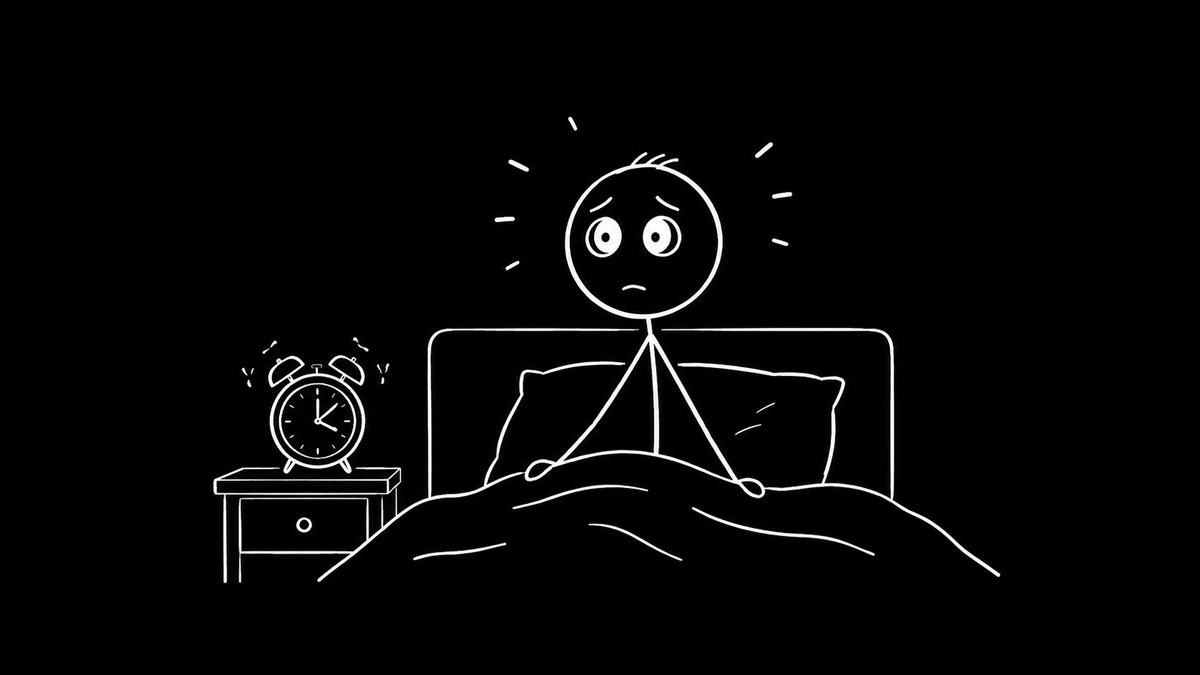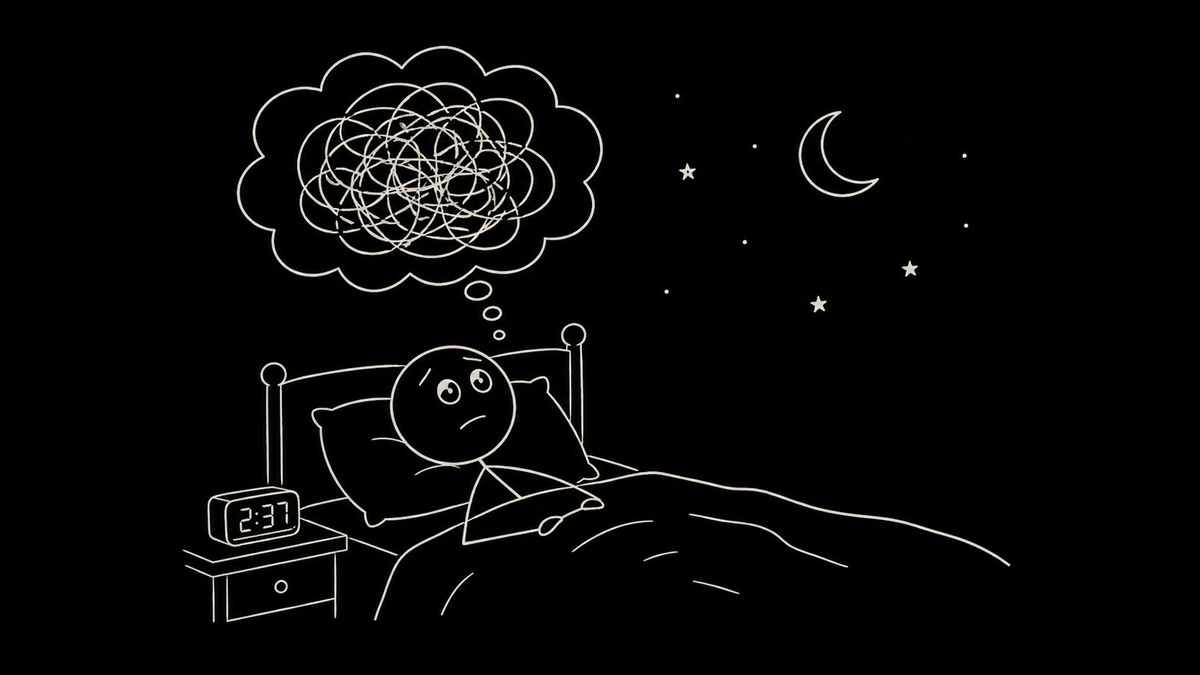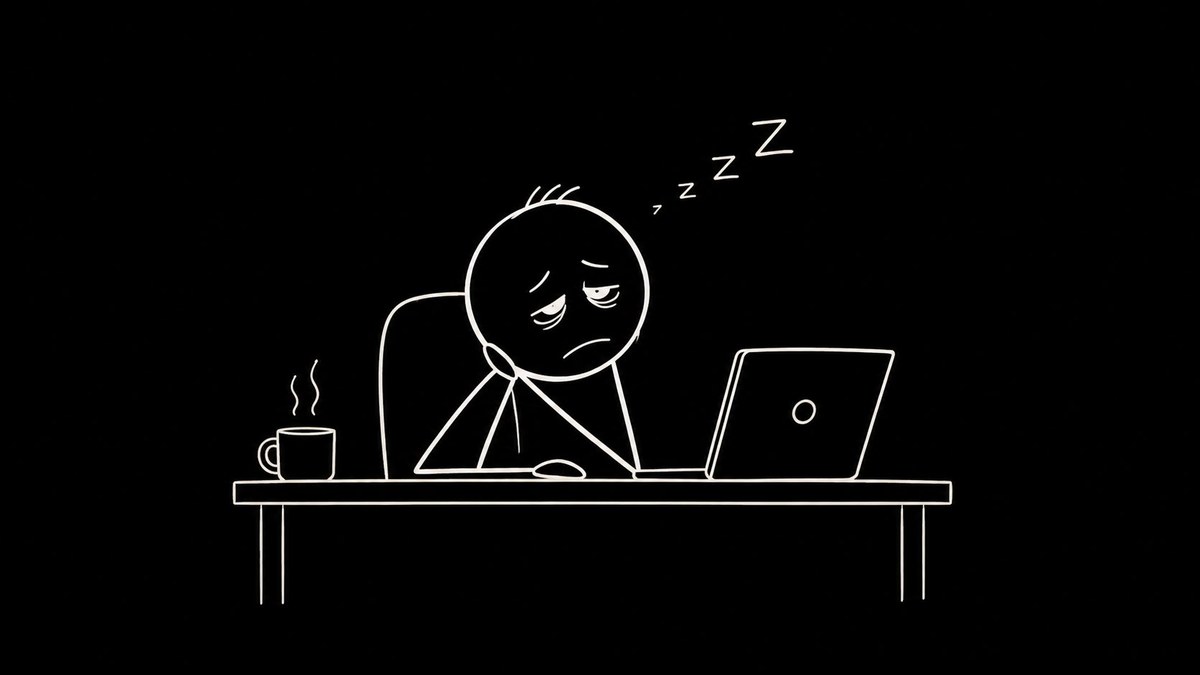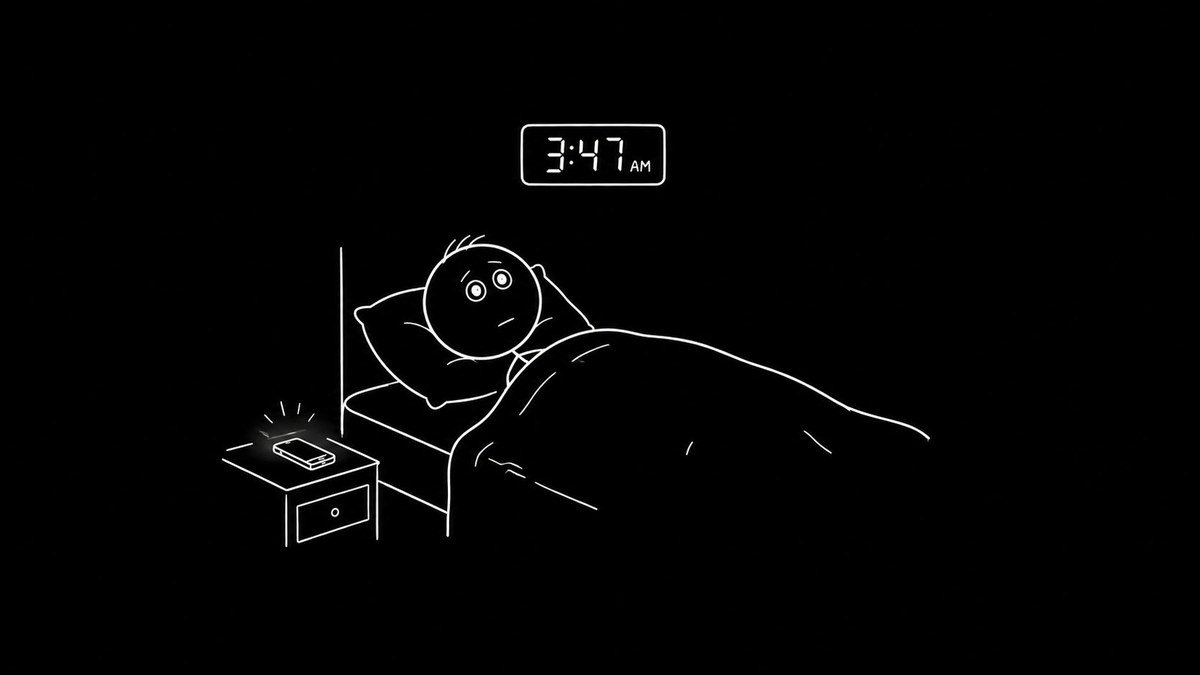
It is 2:47am. You are exhausted. You have been exhausted since 4pm. You waited for this moment all day, the moment your body could finally rest, and now that it is here, your brain has decided it is the perfect time to review every embarrassing thing you have said since 2009.
This is sleep anxiety. Not regular tiredness. Not classic insomnia. It is the specific cruelty of a brain that refuses to power down even when your body is begging it to.
What sleep anxiety actually is
Sleep anxiety is anxiety that activates as you approach sleep, or wakes you in the middle of the night and keeps you awake by spiraling. It is not just having trouble falling asleep. It is the active dread, the racing thoughts, the catastrophizing, the body-buzz that runs counter to everything you would call rest.
People who have it describe the same paradox: they were tired all day, then the second their head hits the pillow, they are wide awake. Or they fall asleep fine, but at 3:17am their eyes open and their brain is already mid-sentence in a worry they did not consent to.
The 3am brain has a physiological reason
Cortisol, your stress hormone, follows a daily curve. It is supposed to drop in the evening, hit its low between midnight and 4am, and start climbing again toward morning to wake you up. In people with chronic anxiety, this curve gets disrupted. Cortisol stays elevated when it should be low. Your nervous system reads this as "still in danger." Your brain wakes up to check the threat. There is no threat, so it invents one. Whatever you have been avoiding thinking about during the day shows up perfectly preserved at 3am, because there are no distractions to compete with it.
This is why the thoughts feel so sharp at night. It is not that they are more true. It is that your prefrontal cortex, the part that puts things in perspective, is half-offline. You are left with the threat-detection part of your brain, alone, in the dark, with no input.
Why being exhausted makes it worse
You would think exhaustion would help. It doesn't. Sleep deprivation actually amplifies anxiety. A tired brain is a more reactive brain. The amygdala (your fear center) becomes hypersensitive. The prefrontal cortex, already weak at night, gets weaker. You react to your own thoughts as if they were emergencies. You cannot reason your way out because the reasoning equipment is offline.
This is also why a single bad night can spiral into a week of bad nights. The exhaustion from one night makes the next night's anxiety worse. The dread of "what if I can't sleep again" becomes its own threat. Now you are anxious about being anxious about sleeping.
The performance anxiety of falling asleep
Sleep is one of the few things that gets harder the more you try. The harder you try to sleep, the more your brain interprets sleep as a task, and tasks require alertness. You cannot will yourself to sleep, you can only stop performing wakefulness. The harder you grip, the further it gets.
People who sleep easily have something in common: they do not think about sleeping. They get tired, they go to bed, sleep happens to them. People with sleep anxiety perform sleep. They lie there monitoring whether they are sleeping yet. The monitoring is itself wakefulness.
What actually helps
None of these will fix sleep anxiety overnight. They are practices that, over weeks, retrain the system.
1. Get out of bed. Counterintuitive but proven. If you have been lying awake for more than 20 minutes, get up. Go to another room. Read something boring under dim light. Return when sleepy. This breaks the association between bed and wakefulness.
2. Stop trying to fall asleep. Switch your goal from "fall asleep" to "rest quietly." Resting with eyes closed gives your body 90% of the recovery that sleep does. Removing the goal removes the performance anxiety.
3. Cold air on the face. Splashing cold water on your face activates the mammalian dive reflex, which slows the heart and downshifts the nervous system. Sounds too simple. It works.
4. The 4-7-8 breath. Inhale 4 seconds, hold 7, exhale 8. The long exhale activates the parasympathetic nervous system. Do this for 4 cycles before bed. Not magic, just physiology.
5. Write down what you are not allowed to think about. Keep a notebook by the bed. When a worry comes, write it down with one sentence about what you will do tomorrow. The act of externalizing it tells your brain: I will handle this in the morning, you can stand down.
6. Stop reading your phone. You knew this one. The blue light is part of it, but the real problem is that your phone gives your brain stimulation right when you need it to bore itself to sleep. A boring brain is a sleeping brain.
When to take it seriously
Occasional sleep anxiety is normal. Most adults experience it during stressful periods. But if it is happening more than three nights a week for more than a month, you are likely in a chronic loop that will not break without intervention. Cognitive behavioral therapy for insomnia (CBT-I) is the most evidence-backed treatment and works better than sleep medication for most people. It is worth pursuing if home strategies have not moved the needle.
Sleep anxiety is not a character flaw. It is a nervous system that learned to be alert at night, probably because something in your life made it adaptive to be alert at night. The unlearning is slow but real. Most people who address it find that within 6-8 weeks, they sleep more easily than they have in years.