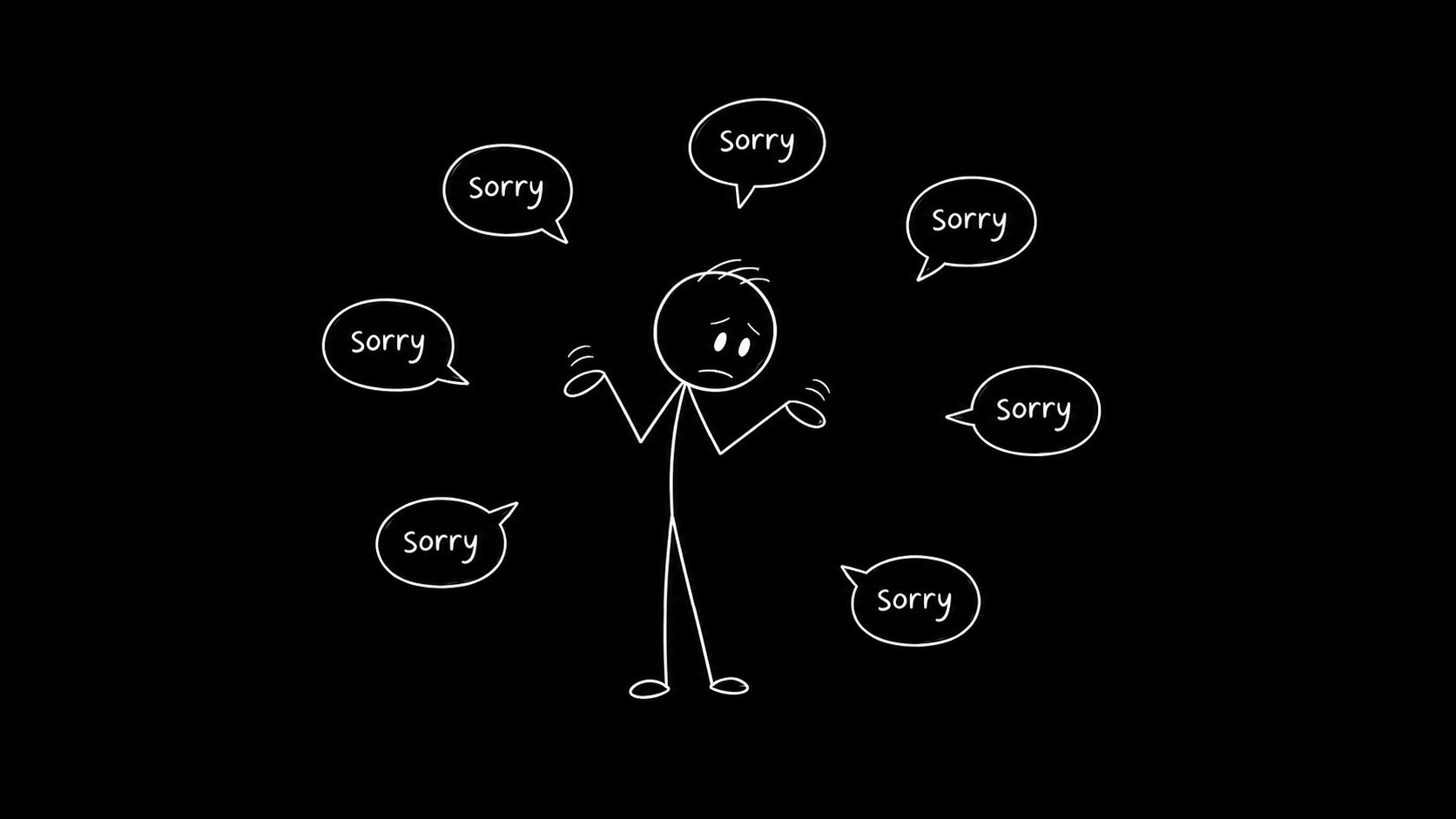
Someone bumps into you and you say sorry. You ask a question at work and open with sorry. You need something completely reasonable and you wrap it in three apologies before you even get to the request. Sorry to bother you. Sorry, quick question. Sorry, is now a bad time. You apologize for existing in a normal amount of space, and you barely notice you are doing it.
The word has stopped meaning I did something wrong. It has become a reflex, a verbal flinch, a way of making yourself smaller before anyone can decide you are too much.
Sorry as a safety behavior
Chronic apologizing is rarely about manners. It is usually about safety. Somewhere along the way, you learned that taking up space was risky, that having needs was inconvenient, that tension in the room might turn toward you. So you developed a preemptive strike. You apologize first, before anyone can be annoyed with you, because getting there first feels safer than waiting to find out if you did something wrong.
It is the same instinct as a dog rolling over. Please do not be upset with me. I am not a threat. I am already sorry. If I apologize enough, maybe you will not withdraw, criticize, or leave.
Where the reflex is built
People who over-apologize often grew up somewhere that made it necessary. Maybe you had a parent whose mood you had to manage, so you learned to smooth every edge before it could catch. Maybe you were blamed easily, so apologizing first became a way to control the damage. Maybe love in your house felt conditional, and being agreeable, low-maintenance, and endlessly sorry was how you kept it.
Whatever the origin, you learned that your presence was something to apologize for. And that belief followed you into adulthood, into rooms full of people who would never dream of blaming you for bumping into them.
What over-apologizing costs you
It is not harmless. Every unnecessary sorry chips away at how you are perceived and, worse, at how you perceive yourself. It signals that you expect to be a burden. It invites people to treat you as one. And it quietly reinforces your own belief that you are always slightly in the way, always one step from being too much.
It also buries the real apologies. When you say sorry for everything, the word means nothing when you actually need it.
How to put the reflex down
The most useful swap is sorry for thank you. Instead of sorry I am late, try thank you for waiting. Instead of sorry for going on about this, try thank you for listening. It flips the whole posture from apology to appreciation, and it stops casting you as the problem in every interaction.
Beyond the swap, start catching the reflex before it fires. When sorry rises automatically, pause and ask whether you actually did anything wrong. Did you harm someone, or did you just exist, ask, need, or take up a normal amount of room? If it is the second, the apology does not belong there. You can let the moment pass without it.
It feels strange at first, almost rude, because the reflex has been running so long it feels like politeness. It is not politeness. It is a survival habit you no longer need. You are allowed to take up space without apologizing for the room you fill.
If you are tired of shrinking to keep everyone else comfortable, Not Giving a F*ck Anymore is the place to start.
Marieme Seck is the author of self-help audiobooks available on Spotify and 30+ platforms worldwide.