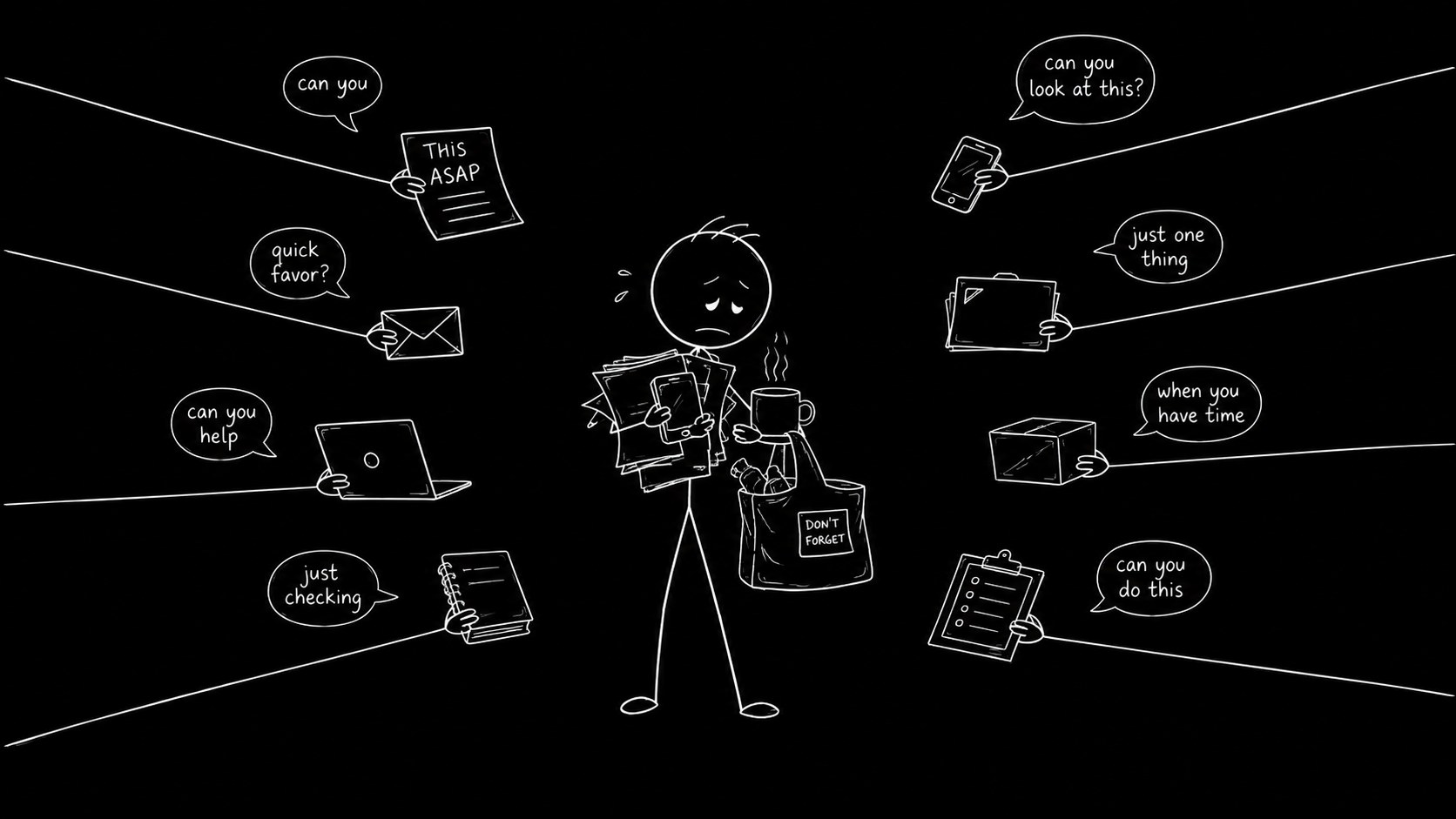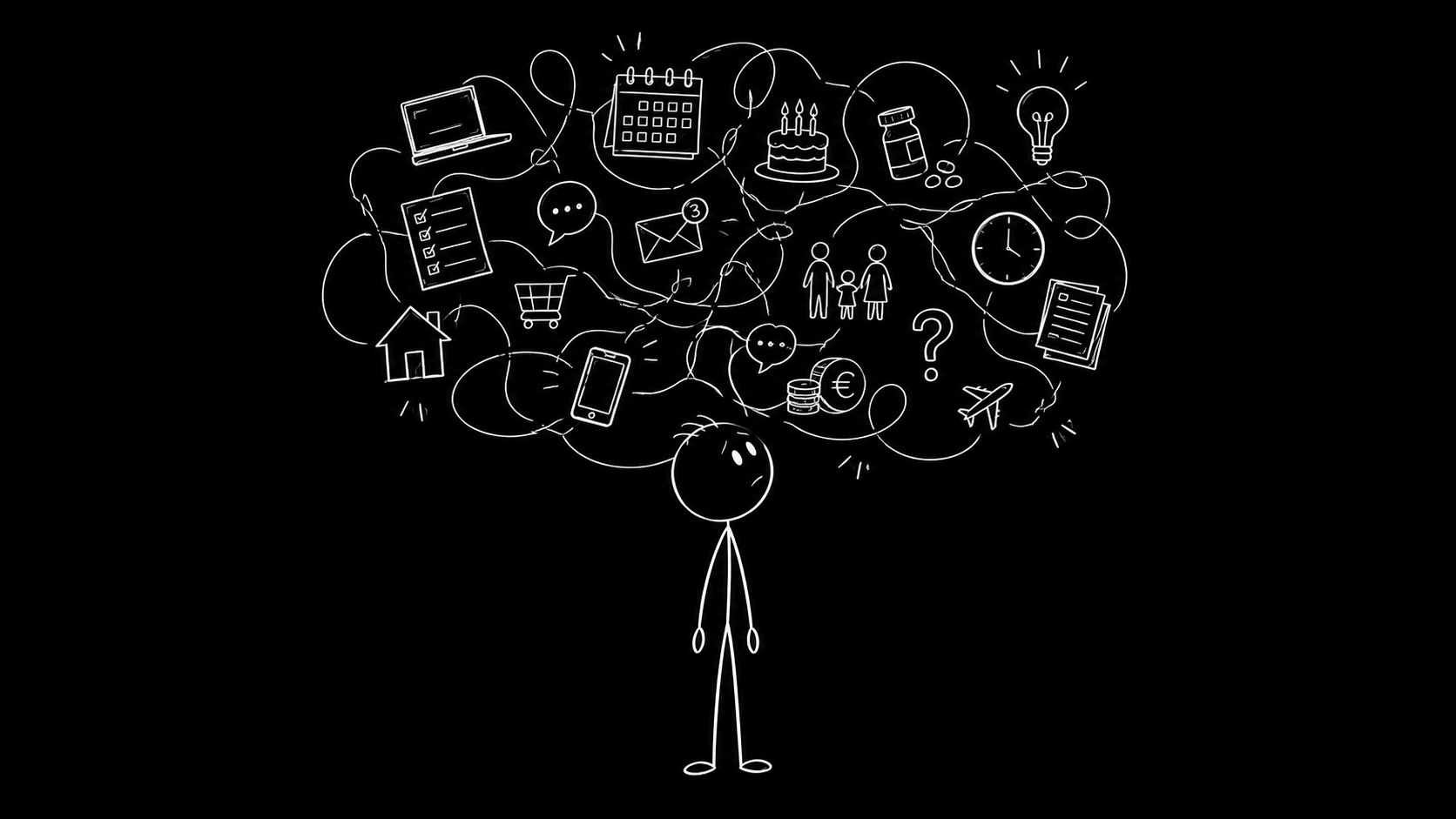
Someone offers to help and says just tell me what to do. And in that sentence is the whole problem, because telling them what to do is the work. Knowing what needs doing, when it needs doing, what happens if it does not get done, who it affects, and in what order it all has to happen. That is the load. The task itself was never the hard part.
When people talk about the mental load, it often gets flattened into housework. Chores. Who does the dishes, who takes out the bins. But the mental load is not the dishes. It is being the one who notices the dishes, tracks whether there is soap left, remembers that the dishwasher has been making a noise, and knows that if nobody deals with it, it becomes a bigger problem next week. You can do none of the physical chores and still carry the entire load.
The four invisible jobs
Researchers who study this break the mental load into distinct steps, and naming them makes the invisible suddenly visible. There is anticipating, seeing a need before it becomes urgent. There is identifying options, figuring out what could be done about it. There is deciding, choosing between those options. And there is monitoring, checking that it actually got handled. Only after all of that does anyone pick up a broom.
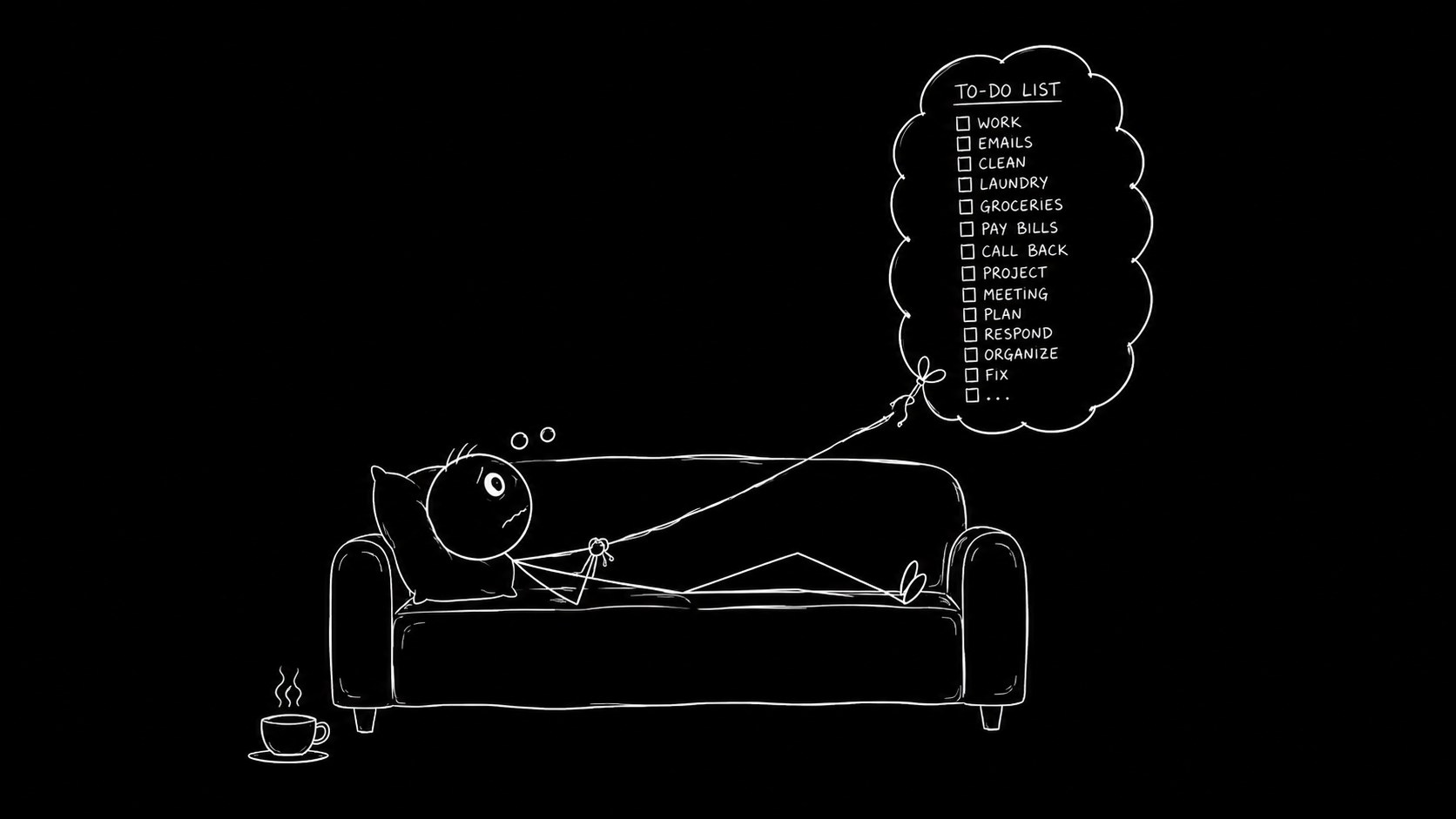
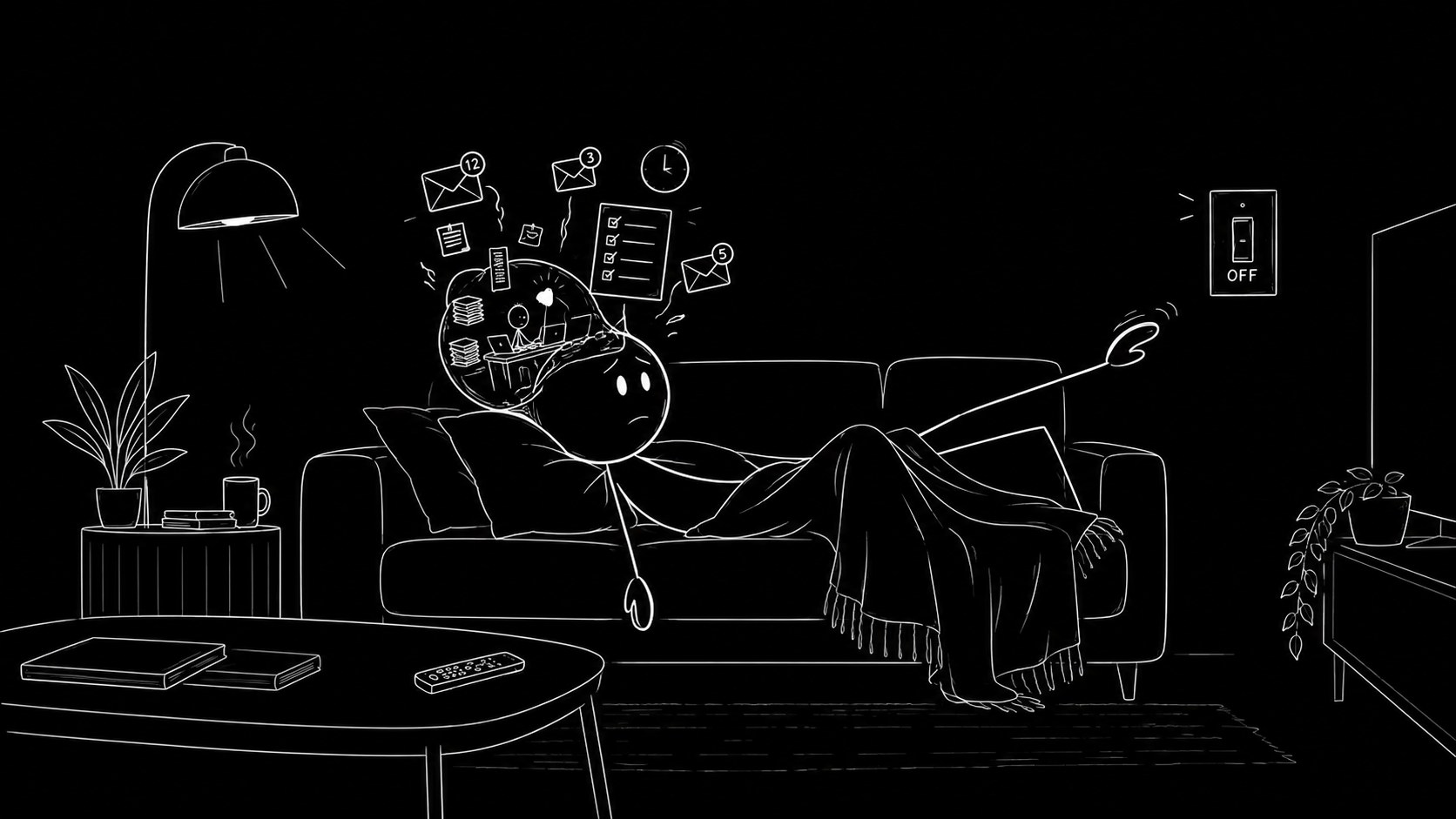
A person can be handed the last step, do the thing, and genuinely believe they are sharing the load equally. But they skipped the first three, which is where the real weight lives. The anticipating and the monitoring never end. They run in the background of your mind while you are trying to sleep, trying to work, trying to have a conversation about something else entirely.
Why it is invisible
The cruel design of the mental load is that when it is done well, nobody sees it. The dinner appears. The appointment is remembered. The gift is bought in time. The crisis quietly does not happen, because someone saw it coming and steered around it. Good mental labor produces the absence of problems, and it is almost impossible to be thanked for a problem that never occurred.
So the person carrying it gets no recognition, because there is nothing visible to recognize, and everyone else genuinely does not realize how much is being held, because the whole point of holding it well is that they never had to feel it.
How it lands on one person
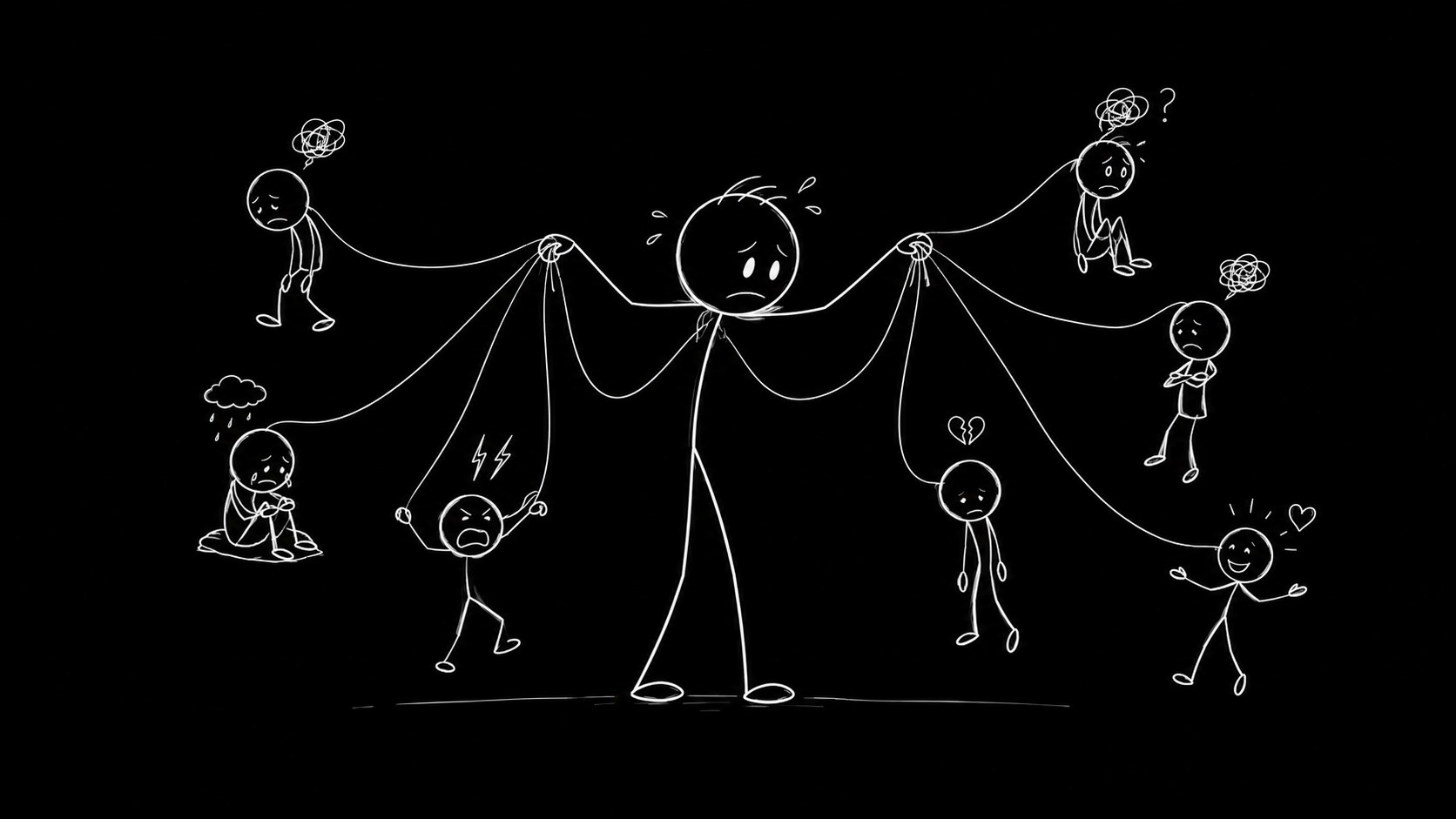
Nobody decides this. There is rarely a conversation where someone is appointed the keeper of everything. It accretes. You noticed first, or you cared a little more, or you could not stand the tension of something being left undone, so you handled it. And the moment you handled it reliably, the people around you stopped tracking it, because they learned it was covered. Each small instance seems trivial. Added up over years, it becomes a full-time job running silently on top of your actual life.
Setting it down
You do not fix the mental load by delegating single tasks, because handing off a task while keeping the anticipating and monitoring just adds management to your plate. What actually shifts things is handing over whole domains, the entire cycle, including the right to notice and decide. That means letting someone own a thing completely, and tolerating that they will do it differently, and sometimes worse, at least at first.
It also means letting some things visibly not get done, so that the load becomes shared reality instead of your private burden. That is uncomfortable, because you are the one who feels the consequences first. But a load that stays invisible can never be shared. It has to be named, made concrete, and handed over in full, before anyone else can carry their part of it.
If you are the one everything runs through, Leave Me Alone is entirely about this: the invisible load, why it lands on you, and how to finally put it down.
Marieme Seck is the author of self-help audiobooks available on Spotify and 30+ platforms worldwide.