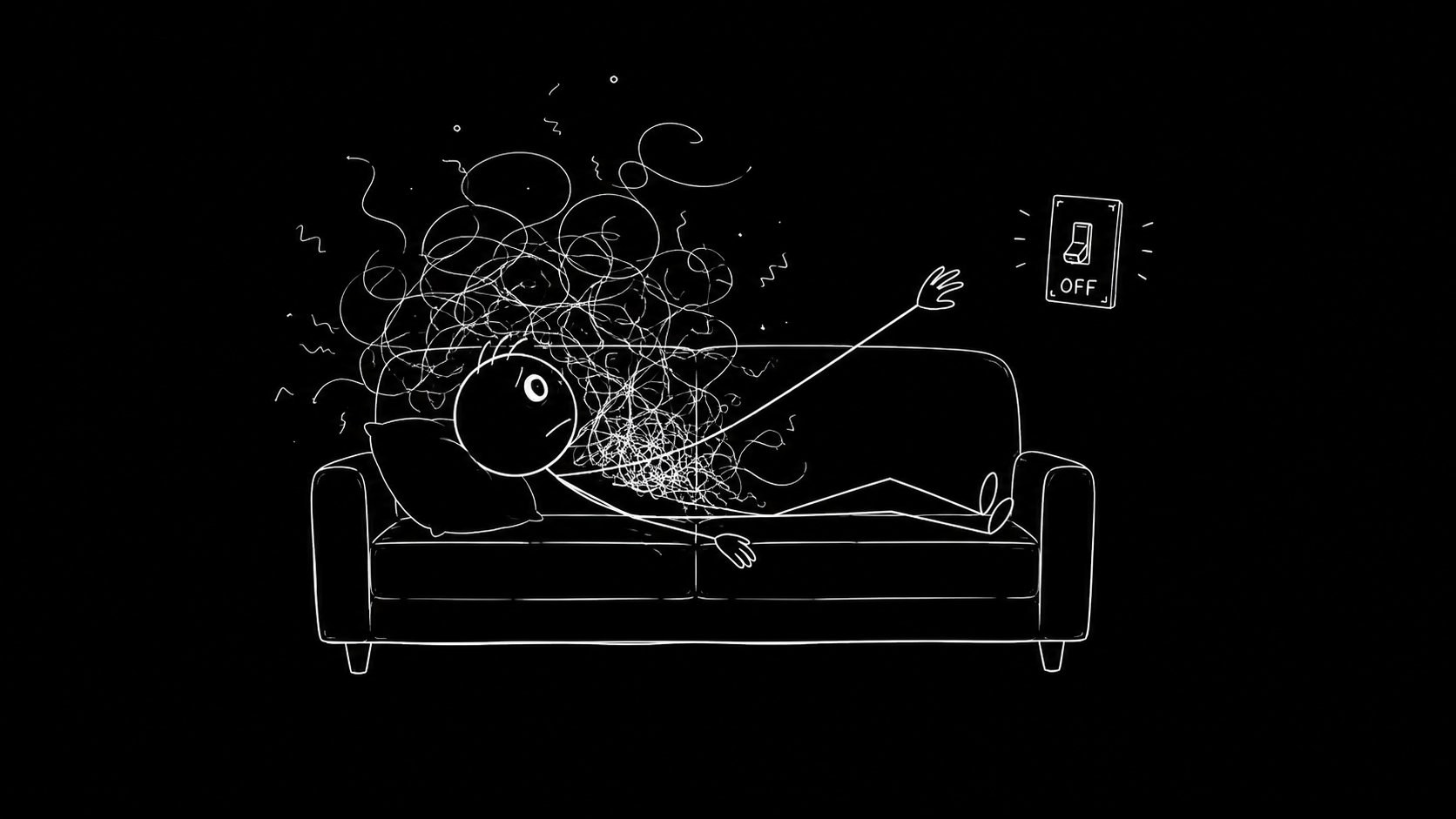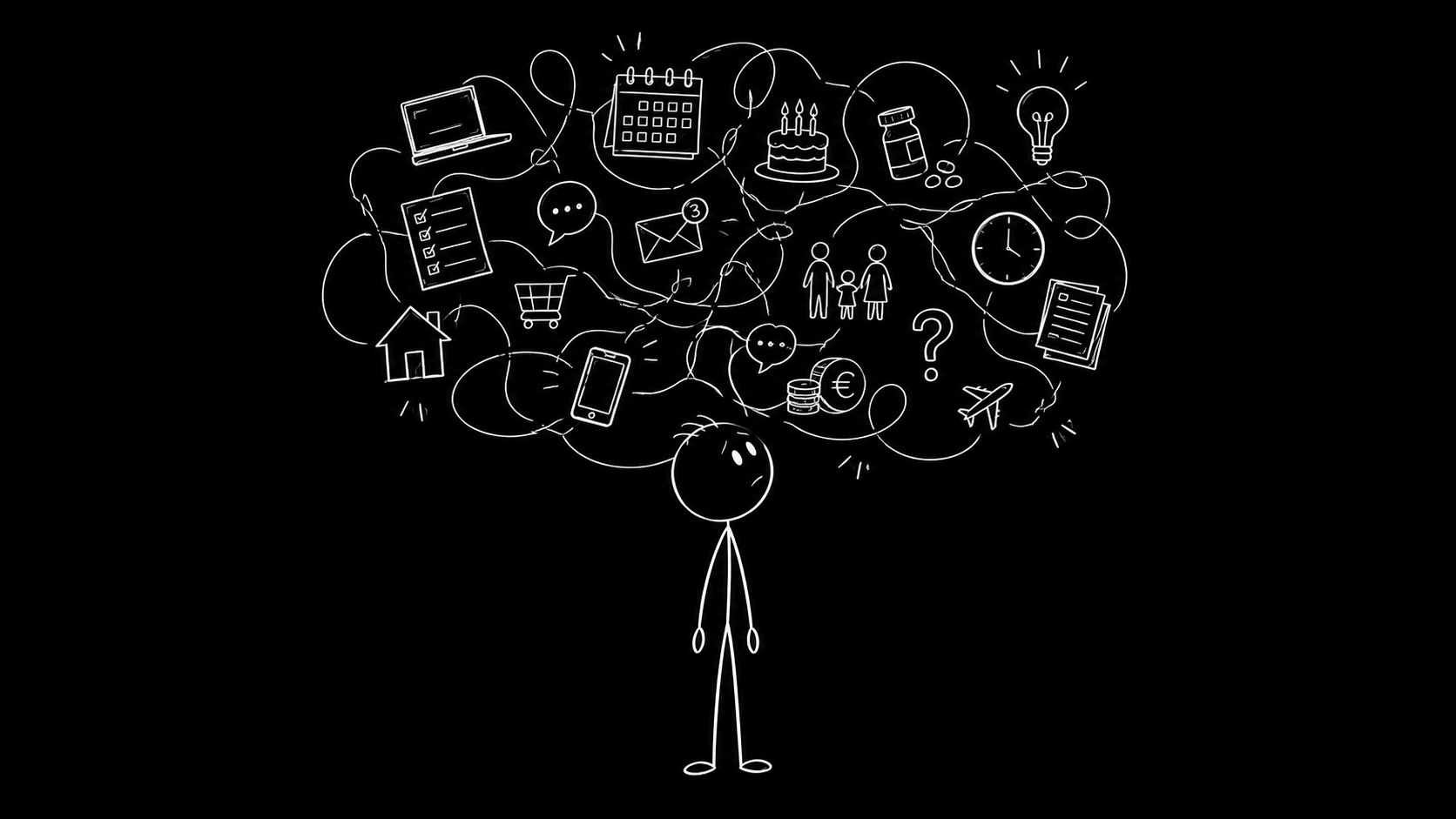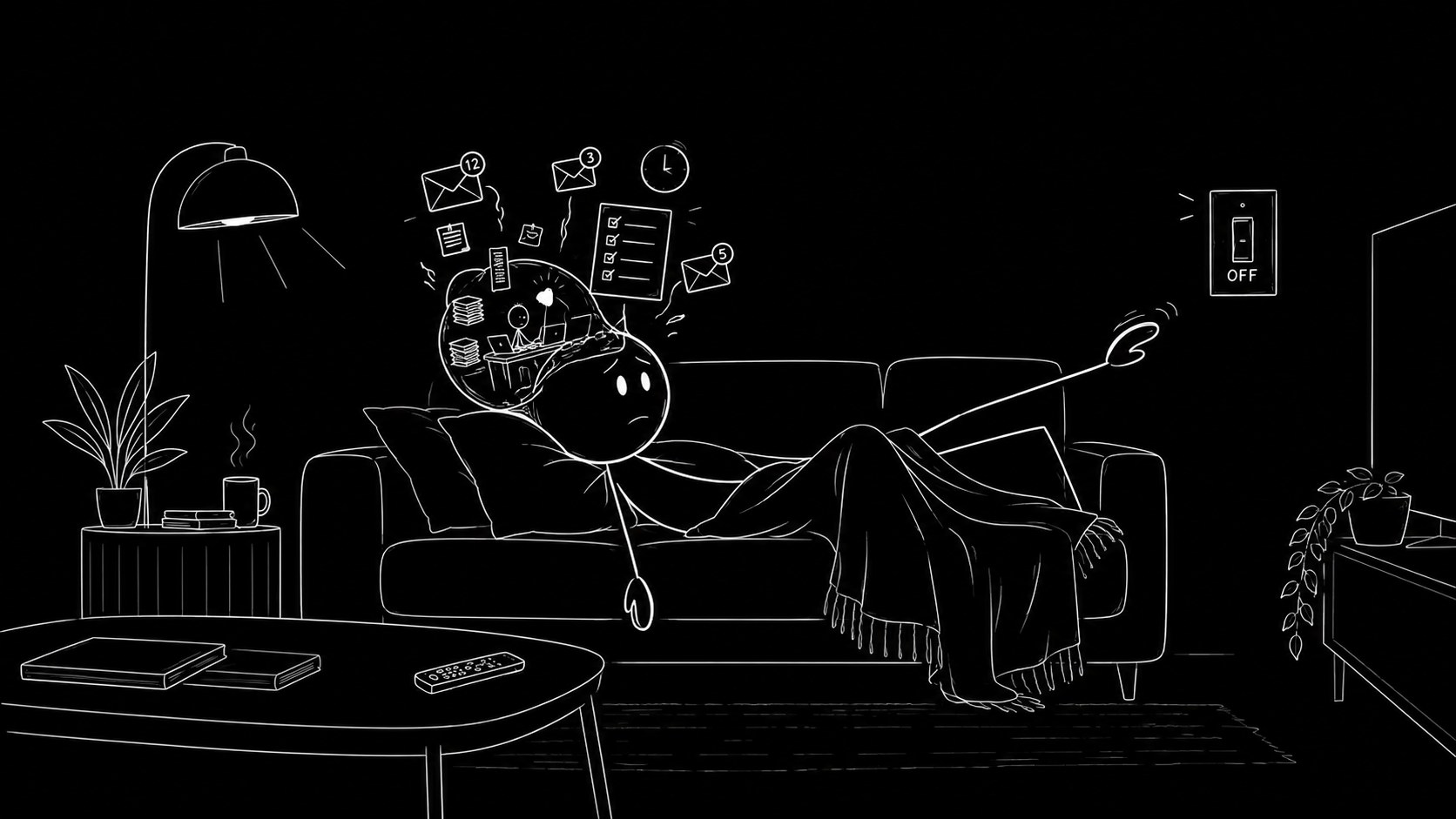
You closed the laptop. You left the building, or the spare room, or wherever the work happens now. On paper you are off. And yet your mind is still in the meeting, still drafting the reply, still turning over the thing someone said in a tone you cannot stop analyzing. Your body is on the couch. The rest of you is still at your desk.
You tell yourself to relax, to be present, to stop thinking about it, and it does not work, because switching off is not a decision you make with your mind. It is a state your nervous system has to enter, and if your day kept it switched on, it does not power down just because the clock says the day is over.
Your body did not clock off
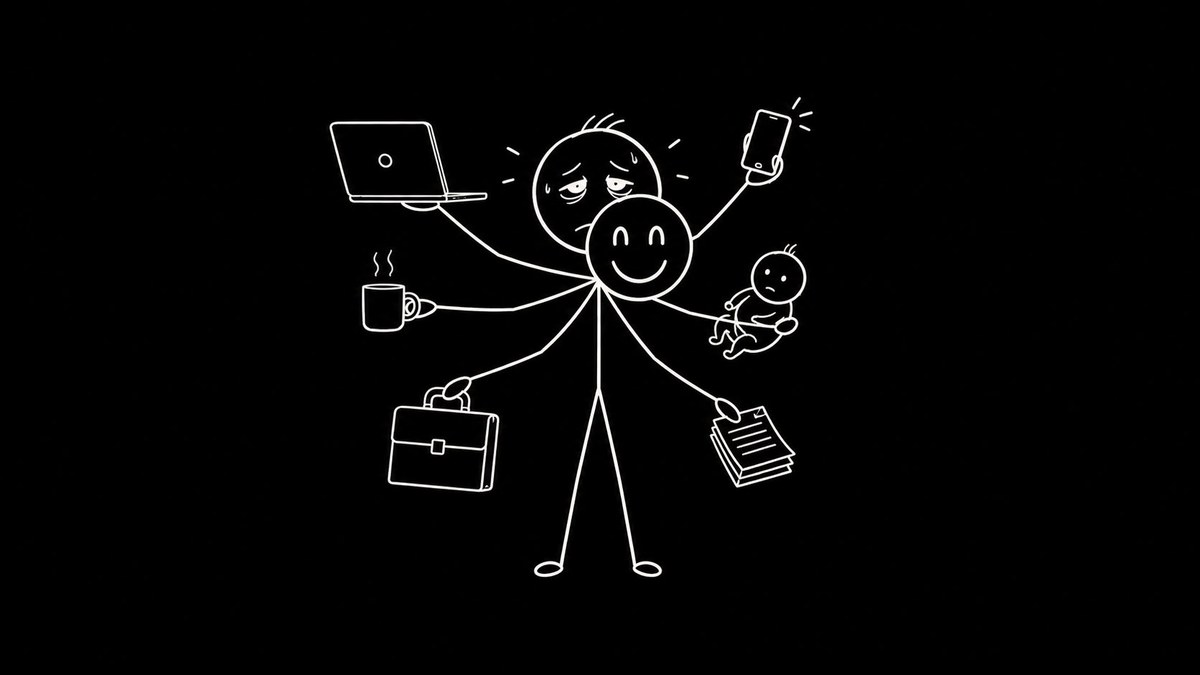
A working day, for a lot of people, is a long stretch of low-grade alertness. Not dramatic stress, just a constant, background readiness. Watching for the next message, the next request, the next problem. Your nervous system spends hours in a mild alarm state, and that state has momentum. It does not stop the second you stand up from your chair. It keeps running, sometimes for hours, because as far as your body is concerned, the threat has not clearly ended. Nobody told it it was safe now.
So you arrive home carrying the physiological residue of the day, and you try to layer relaxation on top of a system that is still braced. It will not take. The body has to come down first, and coming down takes an actual signal, not just the absence of work.
Why the modern day makes it worse
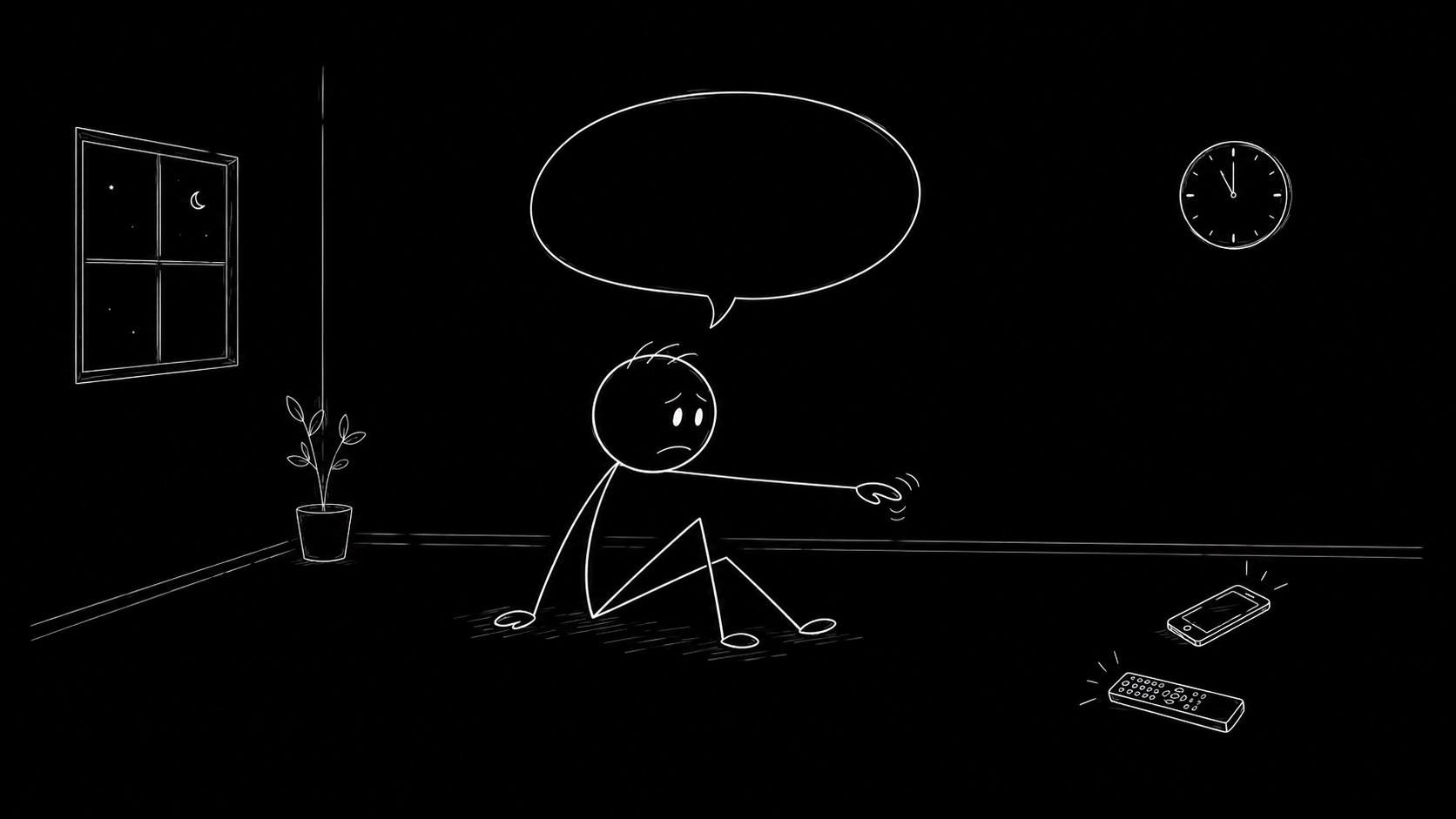
There used to be a commute, a walk, a physical distance between the place you worked and the place you lived. That gap was doing quiet work. It gave your nervous system a transition, a stretch of time and movement that told it one state was ending and another beginning. For many people that gap has collapsed. Work happens where you sleep. The laptop closes and you are already home, with no journey in between, and your body never gets the memo that it is allowed to stand down.
On top of that, work rarely fully ends anymore. The phone keeps buzzing. A message could arrive at any hour. So your system stays half-on, permanently, because it is never given a clear signal that it is truly off duty until tomorrow.
Giving your body the signal
The thing that helps is a deliberate transition, a ritual that means the same thing every day: the day is over, you are safe, you can come down. It does not have to be big. A short walk around the block, even a fake commute, gives your body the movement and the gap it lost. Changing out of your work clothes tells your body the role is over. A few minutes of slow breathing, where the exhale is longer than the inhale, actively tells your nervous system the alarm can switch off.
The point is consistency. When you do the same small thing every day between work and rest, your body learns to use it as a doorway. Over time, the ritual itself starts to trigger the shift, and coming down stops being something you fail at and becomes something that happens on its own.
You are not bad at relaxing. Your nervous system was simply left switched on, and no one ever taught it how to power down. It can learn. It just needs the signal.
If your body will not settle at the end of the day, Regulate Your F*cking Nervous System and The Silent Burnout go into why, and what actually helps.
Marieme Seck is the author of self-help audiobooks available on Spotify and 30+ platforms worldwide.