There is a sentence you are still waiting for
You know exactly who owes it to you. The name came before you finished reading the title: a parent, the person who left without explaining, the friend who chose someone else, the boss who humiliated you in front of a room. You have been waiting for years, with dignity and with excellent arguments, for the day they finally say it.
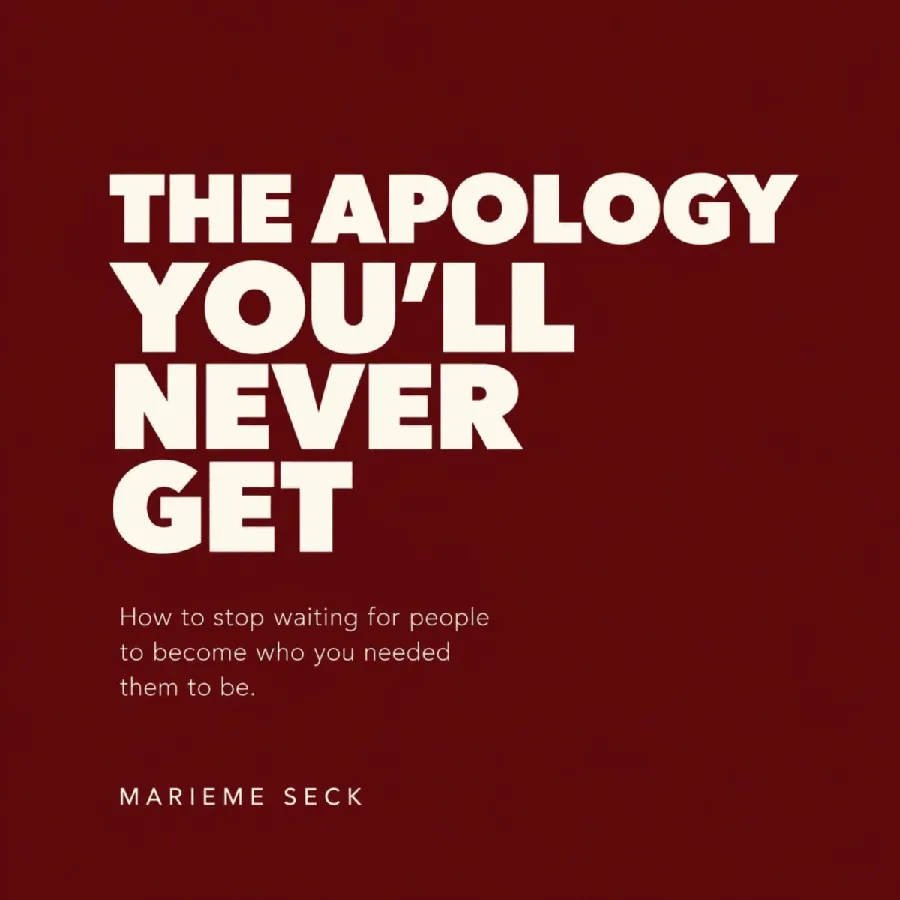
The Apology You'll Never Get starts with the truth nobody tells people who wait: most of them are never going to say it. Not because they are monsters, but because in their version of the story there is nothing to apologize for. And an apology that never comes is not a debt that will one day be paid. It is a loss, and a loss is something you are allowed to grieve.
It was never about the word sorry
What you have been rehearsing in the shower is not an apology. You want them to say that it happened, that it hurt exactly where it hurt, and that you were not crazy. You have been waiting for a witness.
Drawing on psychiatrist Aaron Lazare's research on apology, Rembrandt's Return of the Prodigal Son and stories from real lives, the book shows why so many perfectly worded apologies leave people empty, and why the one thing that heals is acknowledgment, whoever it comes from.
You don't need them to be sorry. You need them to admit it happened.
Why the apology may never come
Memory is not a recording. Elizabeth Loftus spent fifty years showing that we rebuild our stories every time we tell them, a little closer to the version we can live with. The person who hurt you has told the story too, and in their version you may not be the victim. You might not even be in it.
Some people were never taught the language of apology. Others know exactly what they did and cannot afford to say it, because "I'm sorry" would mean "I did it", and that sentence would bring down everything they believe about themselves. Their silence was never a verdict on your worth. It was a wall, and walls don't have opinions about the people standing outside them.
The cost of keeping the door open
Every door you leave open, you have to stand next to. The book counts what the waiting really costs: the anger that lands on the people who came after, the friendships interrogated like a border crossing, the clock stopped on one morning years ago. From Hiroo Onoda, the soldier who kept fighting for twenty-nine years after the war had ended, to Miss Havisham and her wedding cake, it shows what happens to a life that waits for a sentence from someone who has already gone home.
It also asks the question most books avoid: who is waiting for a sentence from you?
You do not have to forgive them
There is a whole industry built on forgiveness, and it often sends people straight back into waiting, this time for a feeling that does not come. This book draws a clear line between forgiving and letting go. Forgiveness is a verdict, and it is optional. Letting go is a movement: you stop standing in the room, whether or not the debt is ever cancelled.
Marieme Seck tells both of her own stories here: the person she has never forgiven and no longer waits for, and her father, the man she hid her dummy for at three years old, confronted at fifteen, and finally met at the same table years later, without the sentence and without needing it.
Letting go is not forgiveness. It's leaving the room. You can take your verdict with you.
Closing the door yourself
The last part of the book is practical. How to give yourself the witness statement nobody else gave you. How to sit at the same table as the person who never apologized without reopening the file. When distance is the only answer. And what to do with all the space that appears once you stop waiting.
The book ends with a companion of seven guided exercises, one for each turn of the road (download it free here), and a full list of sources, from Plato's Apology and Kafka's Letter to His Father to Simon Wiesenthal's The Sunflower.
Inside the book
Four parts, thirteen chapters and a companion of seven exercises: The Waiting, Why It Won't Come, What It's Doing to You and The Way Out.
- IntroductionThe Sentence You're Waiting For
- Chapter 1Everyone Has One
- Chapter 2What You're Really Waiting For
- Chapter 3The Cost of Keeping the Door Open
- Chapter 4They Don't Remember It the Way You Do
- Chapter 5Some People Can't, and It's Not About You
- Chapter 6The One You Owe
- Chapter 7When the Apology Finally Comes
- Chapter 8You've Been Explaining Yourself to Someone Who Isn't Listening
- Chapter 9Anger Is a Way of Staying Connected
- Chapter 10Giving Yourself What They Couldn't
- Chapter 11You Don't Have to Forgive Them
- Chapter 12Sitting at the Same Table
- Chapter 13Closing the Door Yourself
- OutroThe Sentence You Wrote Yourself
- CompanionSeven exercises
Who it speaks to
Anyone who still has a name in their pocket. The daughter waiting for her mother to admit what happened in that house. The man who was left with a four-line text message. The friend who was dropped after twenty years without a word. The colleague who still replays one meeting. And anyone who suspects, quietly, that someone is waiting for a sentence from them too.